


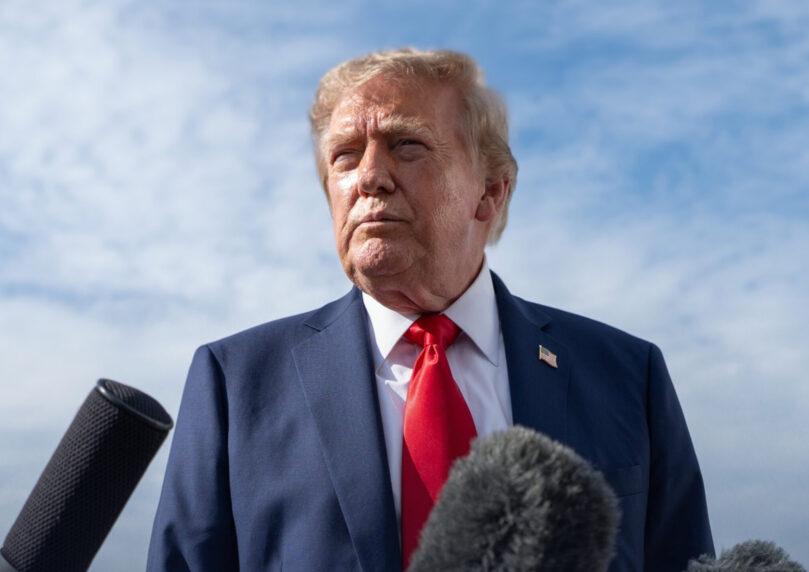
U.S. President Donald Trump was asked Wednesday evening whether his administration could deploy the CIA to arm Iranian opposition forces in an effort to spark a popular uprising against the ayatollah regime in Tehran—and chose to leave the question completely open. Trump neither confirmed that such a plan exists nor ruled it out, saying that publicly discussing such operations would be inappropriate.
During an exchange with reporters, Trump was asked directly: “If you want the Iranian people to rise up, would you send the CIA to arm the Iranians?” “I wouldn’t want to say that,” Trump replied. “It wouldn’t be appropriate to say.” The answer drew attention in Washington precisely because of what Trump did not say: He conspicuously declined to deny the possibility that his administration is considering military assistance to opposition forces inside Iran.
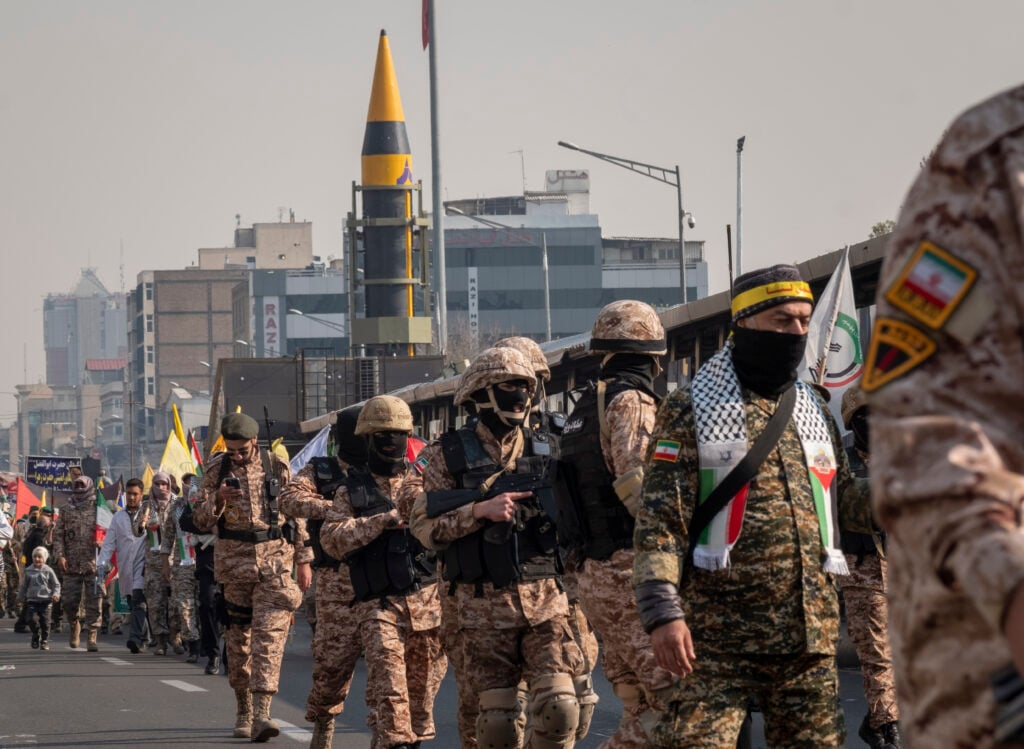
Alongside his refusal to rule out arming regime opponents, Trump delivered an aggressive message to Tehran, explicitly declaring: “I’m ready to carry out another attack on Iran.” The president also discussed U.S. military activity already carried out around the Strait of Hormuz, mocking what he portrayed as the Iranian military’s inability to counter American forces. “We destroyed all the new equipment they tried to put along the Strait of Hormuz; some of it defensive and some offensive,” Trump said. “They were trying to locate the ships because they simply can’t see them.”
Trump also touted the depth of American intelligence penetration into Iran in particularly blunt terms: “We see everything they do. They can’t even go to the bathroom without us seeing it.” The president then turned to the regime’s increasingly unstable domestic position, arguing that the ayatollahs’ grip on the streets is approaching its limits.
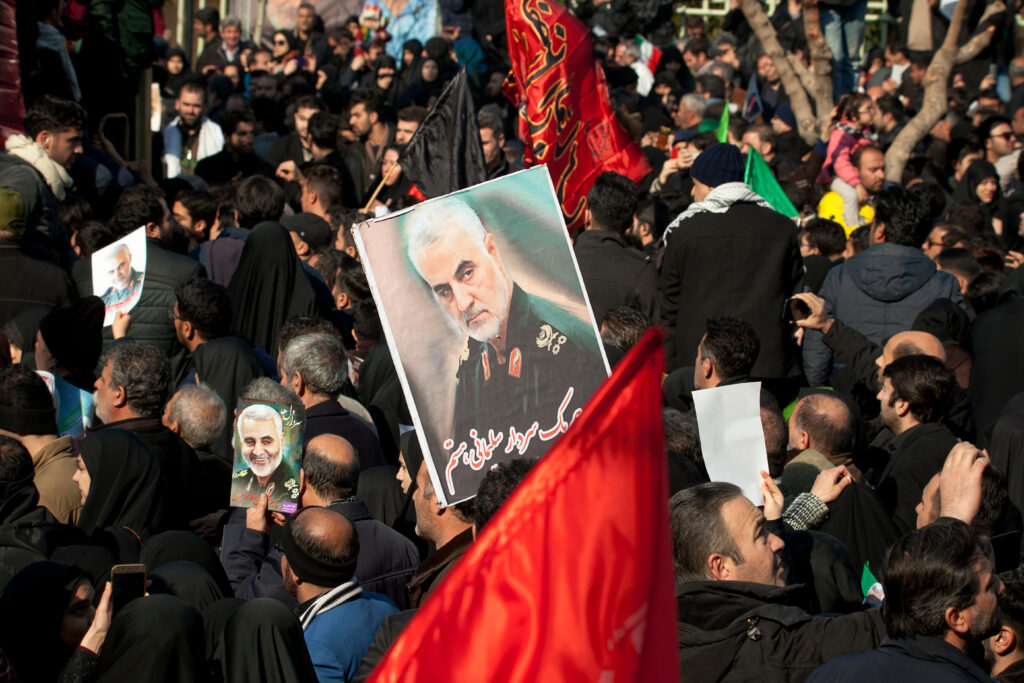
“The regime is getting weaker, and at some point they won’t be able to shoot people so easily,” Trump said. “The people aren’t going to continue putting up with it.” Trump also cited staggering figures for the number of protesters he says have been killed by the regime. “As of three months ago, 52,000 protesters had been killed there,” Trump said. “Now I’m hearing the number has gone up by another 20,000 to 25,000. Altogether, close to 65,000 protesters have been killed there.”

The remarks come after months of conflicting reports surrounding possible U.S. support for armed opponents of the Iranian regime. In March, reports emerged that the Trump administration had held contacts with Kurdish groups opposed to the regime in Tehran, with some reports claiming that military backing was being considered. Another report, however, citing a senior source in Iraqi Kurdistan, denied the claims and said Trump had not asked Kurdish forces to invade Iran and that no covert CIA program to arm them was underway at the time.
The issue resurfaced in May, when Secretary of State Marco Rubio was asked about Trump’s comments that he wanted to see the Iranian people resist the regime. Rubio declined to reveal whether American weapons were actually being provided, instead framing Trump’s remarks as a broader desire to see Iranians stand up against their oppressors. Calls for more direct action have also grown in Congress. Republican Sen. Ted Cruz openly called on the administration to arm opponents of the regime inside Iran, arguing that the government should ultimately be toppled by Iranians fighting for their own freedom rather than by American troops on the ground.

The combination of hints surrounding possible covert CIA activity, Trump’s declared willingness to launch further military strikes, U.S. attacks on targets around the Strait of Hormuz and his claims of sweeping American intelligence penetration marks a significant escalation in Washington’s maximum-pressure campaign against Tehran.
Trump is simultaneously threatening direct military action against regime assets while pointing to growing unrest inside Iran following the mass killing of protesters. His deliberate ambiguity over whether Washington could arm Iranians against the regime leaves Tehran facing uncertainty on two fronts: an American military and intelligence threat from outside, and mounting opposition from within.