


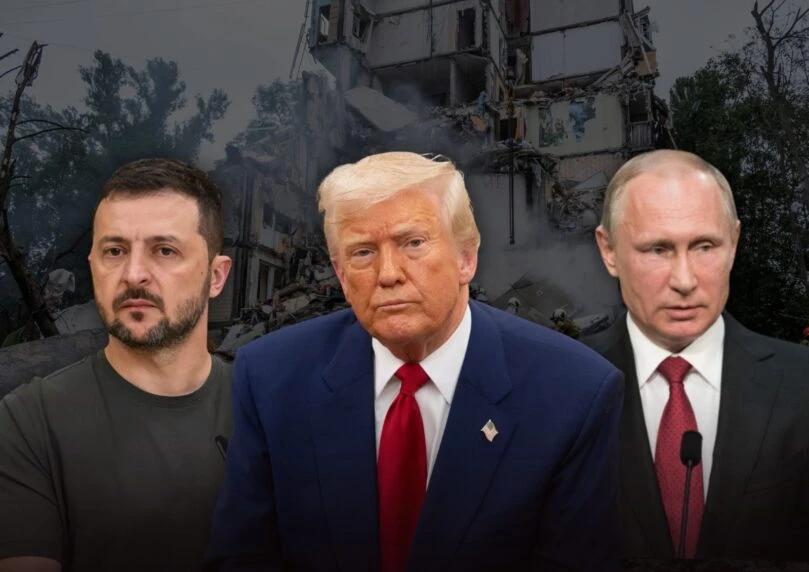

A series of explosions rocked key sites across Ukraine overnight from Monday into Tuesday, part of a Russian assault aimed at crippling the country’s electrical grid ahead of winter, according to Kyiv. Russia’s Defense Ministry said the strikes targeted energy facilities in the Vinnytsia, Dnipropetrovsk, and Kharkiv regions that supply power to defense plants and the Ukrainian military. Four power stations and two substations were hit, along with port infrastructure in the city of Kiliya on the Danube River. Moscow also claimed two cargo ships were struck—one at the port of Pivdennyi and another in the Black Sea—carrying military equipment and dual-use cargo for Kyiv.

 2+
The energy infrastructure attacks add to the relentless military pressure Russia is applying on Ukraine. Alongside strikes on critical facilities, Russian forces continue launching hundreds of drones, ballistic missiles, and cruise missiles at Kyiv and other urban centers. The attacks are taking a civilian toll, including a recent strike in Zaporizhzhia region that reportedly killed dozens of civilians.
Ukraine… Another morning, another day. And once again, residential buildings have become the target of russians, with people being pulled out of their own homes. No matter how much we are warned in advance about nighttime shelling, it is simply impossible to protect against it. We are not moles, we are not underground creatures, we are people, we are Ukrainians, and not all of us have the opportunity to hide in the subway or metro. Therefore, the russians will continue to take advantage of this, and that is why there are once again many dead and wounded among the civilian population. In the video is the city of Dnipro, one of the Ukrainian cities affected this night.
— Katerina Horbunova (@blue_eyedKeti) November 3, 2026
According to Witkoff, the Abu Dhabi talks are designed to advance Trump’s vision for ending the war. They’re expected to focus on post-war security arrangements, de-escalation mechanisms, humanitarian steps, and a long-term peace framework. Meanwhile, Moscow has expressed willingness to hold direct dialogue between Russian President Vladimir Putin and Ukrainian President Volodymyr Zelensky—a development Kyiv hopes will lead to a formal summit between the two leaders.
 2+
The diplomatic push extends beyond Abu Dhabi. This week, U.S. officials are scheduled to meet in Brussels with senior representatives from France, Germany, Britain, the European Union, and NATO. The discussions will address international security guarantees for Ukraine, shaping Europe’s post-war security architecture, and examining economic mechanisms to finance the country’s reconstruction. Witkoff noted that the efforts build on earlier contacts held in Kyiv, Oslo, and St. Petersburg.
Humanitarian Breakthrough: Can Local Deals Pave the Way for a Broader Agreement?
One foundation for the current effort is humanitarian mediation channels that operated in recent weeks. A breakthrough came with an agreement brokered with the help of U.S. First Lady Melania Trump, which led to a local humanitarian ceasefire in the city of Oleshky, currently under Russian occupation.
 2+
The deal allowed safe evacuation of civilians and delivery of critical aid, including food and medicine, to about 2,000 residents trapped in harsh conditions, most of them elderly. The local understandings showed that practical agreements are possible even between warring sides. Now the question is whether this experience can translate into progress in the direct talks.
Ahead of Talks: Both Sides Try to Improve Their Positions
Despite the diplomatic efforts, the fighting continues, with both sides working to enter talks from a position of strength. Ukraine’s military has intensified deep strikes into Russian territory, using hundreds of suicide drones. According to reports, the attacks reached about 500 miles beyond the border. They hit defense industry complexes in the Nizhny Novgorod region, along with logistics centers, distribution facilities, and Russian military computer systems. Kyiv presents the operations as an attempt to disrupt the Kremlin’s supply chains and create military leverage ahead of the Abu Dhabi discussions.
Meanwhile, fighting along the contact lines continues to exact a heavy toll. According to Ukraine’s General Staff, Russia is suffering close to 1,500 casualties—killed and wounded—per day. The figure reflects Ukraine’s assessment and is not independently verified. Military attrition and the war’s human and economic costs form the backdrop to the diplomatic efforts Washington is leading. Still, despite the willingness to hold direct talks, mutual attacks continue, and it remains unclear whether the upcoming contacts will lead to a breakthrough or remain another mediation attempt between the sides.