


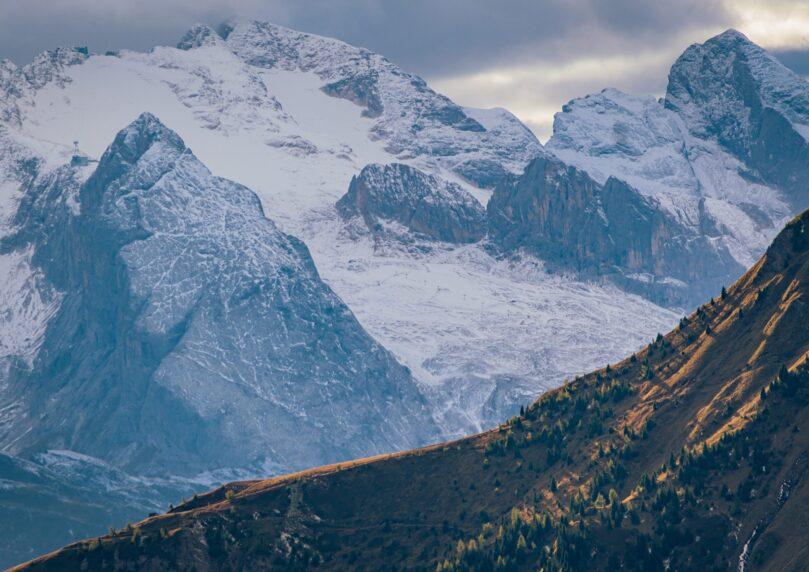

About 250 shells, mortar bombs, and other munitions from World War I have surfaced in the Dolomites mountains of northern Italy, exposed by accelerating glacier melt after more than a century buried under ice. The Italian military completed a complex operation to remove the dangerous ordnance from mountainous areas and popular hiking trails.
Melting Glaciers Expose More Than 250 Unexploded WWI Bombs in the Dolomites https://t.co/ONEbDMax4i
— Gizmodo (@Gizmodo) October 27, 2026
According to the Italian military, most of the munitions were discovered in the Trentino-Alto Adige region in the country’s north by hikers and nature researchers. One shell turned up by accident after a car rolled into a ravine and firefighters responding to the scene spotted it near a tree.
The incident happened in June near the town of Caldonazzo, after a driver who had parked his car forgot to engage the handbrake and the vehicle rolled into the ravine. When firefighters arrived to extract the car, they noticed a 90-millimeter mortar shell lying at the base of a tree. The shell, which had remained in place since World War I, was later removed by a specialized bomb disposal unit.
via @CNNTravel
Hundreds of World War I munitions exposed by melting ice removed from Dolomites https://t.co/zJoQKCmiA7
— World Travel Index | News and Inspiration (@Wtravelindex_en) October 28, 2026
Most of the munitions found are remnants of the “White War,” fought between Italian and Austro-Hungarian forces from 1915 to 1918. For more than a century the shells remained buried beneath thick layers of snow and ice, but accelerating glacier melt in recent years has exposed them again.
In August, specialists from the Second Engineering Regiment of the Julia Alpine Brigade began an operation to remove the munitions. The effort continued until October 16 and involved work in especially high and dangerous areas, where soldiers had to contend with difficult terrain conditions.
El deshielo de los glaciares en los Dolomitas, al norte de Italia, dejó al descubierto más de 250 artefactos explosivos de la Primera Guerra Mundial. Los hallazgos se registraron cerca de Canal San Bovo, en el valle de Primiero, donde el Ejército italiano realizó labores de recuperación y neutralización.
Las municiones datan de la llamada ‘Guerra Blanca’, los enfrentamientos entre tropas italianas y austrohúngaras en las montañas alpinas entre 1915 y 1918.
Las autoridades recomiendan a excursionistas y montañistas no tocar estos artefactos y reportar cualquier descubrimiento a las fuerzas de seguridad.
📷: Cortesía.
— Noticiero El Salvador 🇸🇻 (@NoticieroSLV) October 27, 2026
In one case, between the Cima del Prata peak and the Forcella Pierolo mountain pass near the village of Baino, a cache of 75-millimeter artillery shells was discovered. Following the discovery, a popular climbing route was temporarily closed until the munitions were removed, then reopened to hikers.
The Italian military explained that the removal operation required exceptionally high mountain climbing skills, since some of the munitions were found at high altitudes and in hard-to-reach areas. They added that removal of bombs and munitions from the world wars is carried out every year, but due to weather conditions the complex activity can mainly be performed in late summer and early fall, before snowfall begins in late October.
Authorities are warning hikers not to touch any suspicious munitions they encounter.