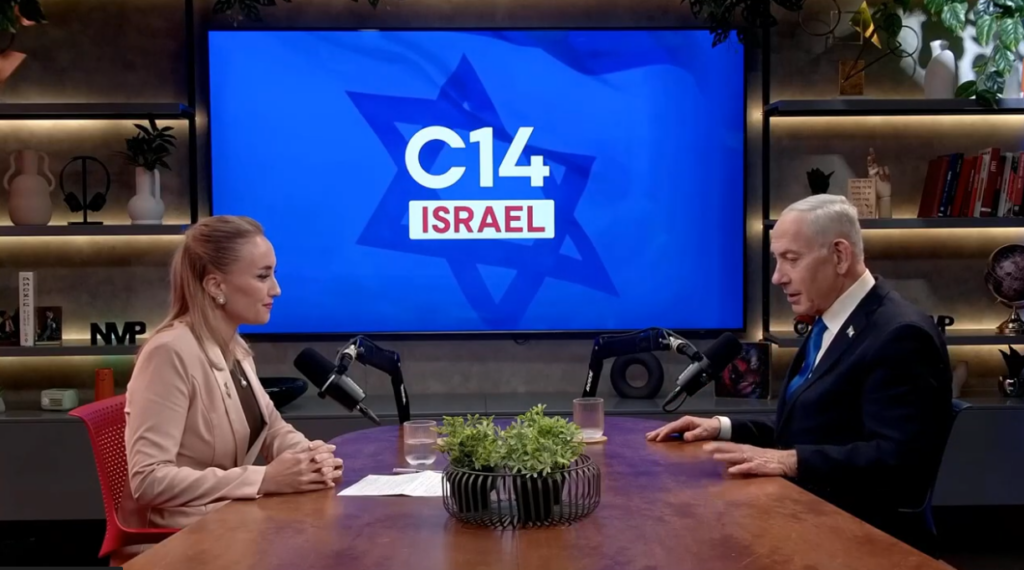

In an exclusive interview with C14, Prime Minister Benjamin Netanyahu explained the strategic necessity behind Israel’s newly formulated national security doctrine, describing a fundamental shift from static containment to active military preemption. Speaking with C14’s Head of the International Division, Sophia Tupolev, the Prime Minister framed the doctrine around the hard lessons learned from the October 7 terror invasion and the subsequent multi-front war, warning that the country cannot gamble its survival on subjective evaluations of foreign goodwill.
“You don’t wait to absorb or accept the building of offensive capabilities against us, and you don’t rely just on interpreting the enemy’s intentions,” Netanyahu stated. “Intentions could change overnight. Friends can become foes overnight.”
🚨 EXCLUSIVE: Hours after PM @Netanyahu announced Israel’s new security doctrine in English, we asked him what changed.
“You don’t wait to absorb or accept the building of offensive capabilities against us, and you don’t rely just on interpreting the enemy’s intentions. Intentions could change overnight. Friends can become foes overnight.”
Israeli Prime Minister (@IsraeliPM) Netanyahu tells C14’s Sophia Tupolev (@sophiatupolev) about the shifting threat landscape that led him to update Israel’s security doctrine, explaining the importance of defense independence.
Full interview with the Israeli Prime Minister drops Tuesday, October 20th in the comments 👇
— C14 News | EN (@c14english) October 19, 2026
Netanyahu’s remarks directly addressed the conceptual failure that long governed Israel’s military and political establishment, where an adversary’s dangerous military expansion was frequently tolerated under the assumption that it lacked the operational intent to attack. Under the newly established ten principles of Israeli national defense, security agencies are now mandated to track and counter physical capabilities, eliminating the reliance on intent. The Prime Minister emphasized that this updated posture dictates active, unilateral prevention—including the execution of surprise preemptive strikes whenever hostile forces begin amassing strategic threats or offensive formations along Israel’s borders.
Netanyahu also expanded on the critical requirement for defense independence, a central pillar of the newly published blueprint. The strategy calls for a historic expansion of domestic defense manufacturing and localized technological development across artificial intelligence, quantum systems, and aerospace, ensuring that the Israel Defense Forces retain maximum munitions autonomy and operational freedom during prolonged campaigns.