



The chairman of Syria’s National Action Movement, Ahmad Ramadan, sharply attacked the Iranian regime on Sunday and warned that the economic and military pressure the United States is exerting on it could lead to another confrontation in the region. In remarks attributed to him amid recent developments, Ramadan argued that the U.S. blockade is pushing Tehran into a corner, and that an attempt to break it through military action could ignite a new war that would deal the regime a heavy blow. The warning comes as voices in Iran increasingly call for breaking the blockade by force, while Washington continues to tighten the pressure.
Ramadan presented a critical view of the Iranian regime’s conduct and argued that Tehran faces a difficult strategic reality. He said the U.S. blockade is narrowing the regime’s room to maneuver, hurting its economic capacity and forcing it into dangerous decisions.
The chairman of the National Action Movement warned that an Iranian attempt to break the blockade could lead to another war with especially severe consequences for Tehran. His words reflect concern that the Iranian regime may choose military escalation to free itself from the economic pressure, even though such a move could lead to a broader confrontation with the United States.

Ramadan’s warning comes after sharp statements from Iran’s Foreign Ministry yesterday. Ministry spokesman Esmaeil Baghaei announced on Monday that Iran will use all means at its disposal to deal with the naval blockade the United States is imposing on it. Baghaei described the blockade as an aggressive military act and claimed Tehran has the right to respond under Article 51 of the UN Charter, which addresses the right to self-defense.
He said Iran is not prepared to accept the American restrictions and reserves the right to act against them. These statements add to discussions in Tehran about breaking the blockade by military means, amid the deadlock in diplomatic contacts with Washington.
According to a Reuters report, Iran’s visible oil exports have fallen in recent months to near zero. The hit to revenues comes on top of other economic difficulties, including inflation, fuel shortages and growing pressure on commercial activity in the country. The American Institute for the Study of War (ISW) assessed in an update published on November 23 that the economic situation is reinforcing the understanding among elements of the regime that the blockade cannot be withstood over time without a significant change.
According to ISW’s analysis, senior Iranian officials and regime-affiliated media have begun openly raising the possibility of resuming military operations if the United States does not meet Tehran’s demands. Among the options discussed in Iranian media was sending a convoy of oil tankers under military escort through the U.S. blockade zone, while preparing for a possible confrontation with U.S. forces. Such a move could bring the two sides into direct confrontation at sea, especially if Iranian vessels try to break through American enforcement lines.
In recent weeks, there have also been more statements from figures identified with the conservative camp in Tehran calling for raising the economic and military price Washington pays for continuing the blockade. These include demands to increase pressure in the Strait of Hormuz and to undermine the ability to resume regular oil traffic in the area. Others in Iran, by contrast, warn that further escalation could worsen the economic crisis without removing the restrictions.
A report published earlier this week said that more than 14 oil tankers have gathered near Kharg Island, one of Iran’s most important oil export hubs. According to the report, based on maritime tracking data and satellite images, the possibility that Tehran is planning to move a convoy of tankers out of the blockade zone is being examined. However, ship-tracking experts stressed that there is no proof the tankers are actually preparing for a coordinated move.
Kharg Island is a vital hub for Iran’s oil industry, and an estimated 85% to 90% of the country’s crude oil exports pass through it. An attempt to break the blockade with tankers leaving the island could therefore turn the area into a focal point of direct confrontation between Iranian and American forces.
Alongside the naval blockade, the U.S. administration is working to expand enforcement measures against Iran. In early November, the U.S. military announced the establishment of a task force called Iron Gate. It is meant to help prevent the transfer of weapons, dual-use technologies, and sanctioned materials across Iran’s land borders and via the Caspian Sea.
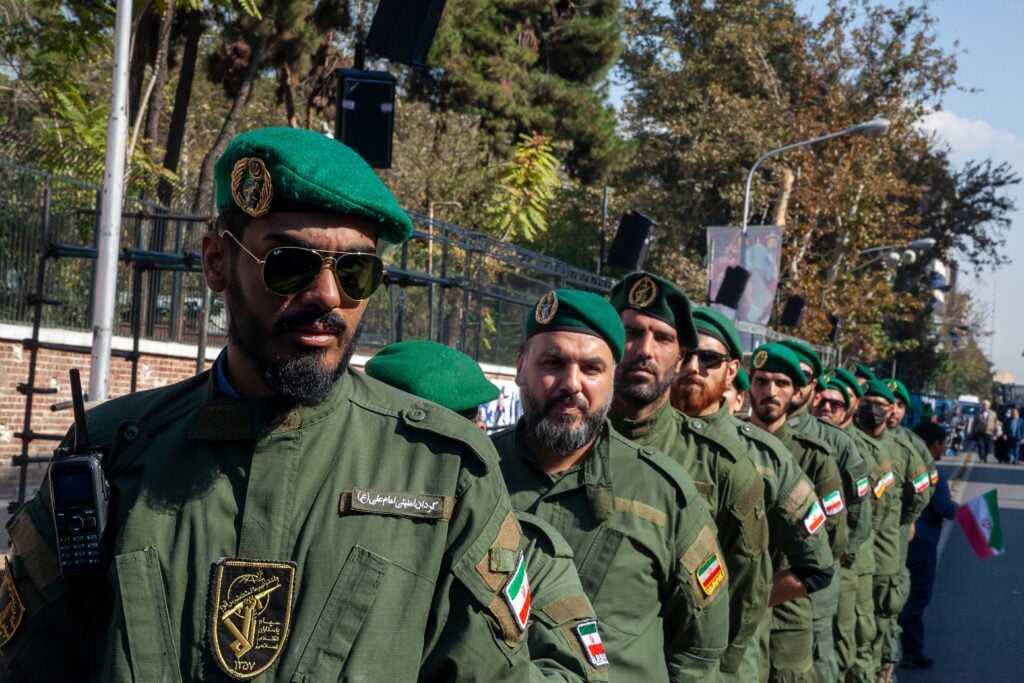
The move reflects an American effort to also close off alternative trade routes Tehran might use to circumvent the blockade. For the Iranian regime, it expands economic and strategic pressure and limits its ability to continue commercial activity through routes that do not pass through the Persian Gulf.
The possibility of renewed war is causing growing concern among Middle Eastern countries. According to an AP report, the Gulf states, Turkey and Pakistan are stepping up diplomatic efforts with Washington to prevent a slide into all-out war. The main fear is that another confrontation between the United States and Iran will not remain confined to Iranian territory, but will also include attacks on energy facilities, power infrastructure, desalination plants and American bases in countries in the region.
Tensions are already evident in mutual strikes and increased military activity in the Gulf. According to ISW, Iran recently attacked radar systems linked to American air defense in Bahrain, a move the institute assesses was meant to undermine defensive capabilities ahead of a possible resumption of large-scale fighting.
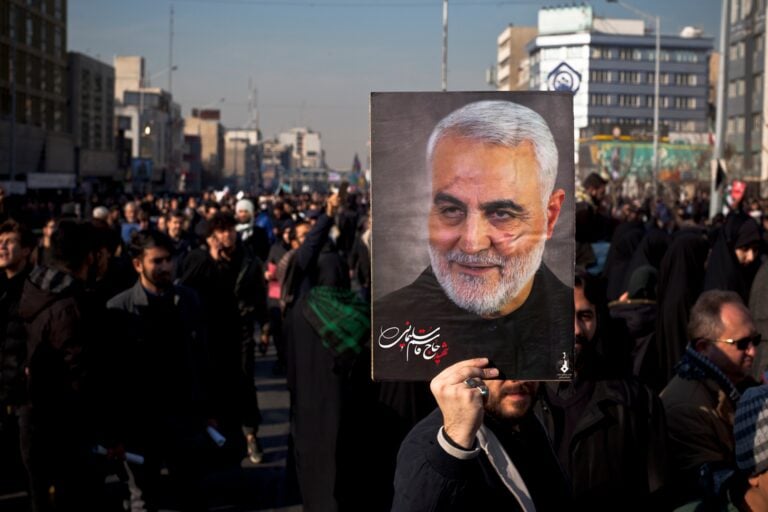
The confrontation between Washington and Tehran is now running on two parallel tracks. The United States continues to apply economic pressure through the blockade and sanctions, while Iran tries to find a way to free itself from the restrictions without meeting American demands. According to a Reuters report last week, U.S. President Donald Trump currently prefers to keep up economic pressure on Tehran rather than resume a broad military attack, partly because of fears of Iranian strikes on the Gulf states’ energy infrastructure.
At the same time, indirect talks between the sides remain stuck over the sequence of steps required for an agreement. Iran demands the lifting of the blockade, the release of frozen assets and the resumption of oil exports before significant progress in negotiations. Against this backdrop of deadlock, Ahmad Ramadan’s warning is being heard. In his view, the more U.S. pressure on the Iranian regime grows, the greater the temptation in Tehran may become to try to break the blockade through military action, a move that could lead the region into another round of fighting.