




Democrats chairman Maj. Gen. (res.) Yair Golan called on Gadi Eisenkot on Monday morning to stop negotiating with Likud and move ahead with forming a new government. In a statement, Golan called the contacts between the sides “sham talks” and called for them to end immediately.

Given the political situation and the lack of agreement on a unity government, the demand effectively means advancing the option of a minority government led by Eisenkot. Such a government would need the Arab parties to support it or abstain in the confidence vote. The call comes after a four-hour meeting between representatives of Yashar! and Likud that ended without a breakthrough, while the disputes over the participation of the Haredim and Itamar Ben Gvir in the coalition remain unresolved.
In a short statement this morning, Golan wrote: “A good morning to stop the sham talks with Likud and form a government. It just takes courage; let’s do it.” Despite its brevity, the statement carries a clear political message. Golan wants Eisenkot to stop trying to reach agreements with Prime Minister Benjamin Netanyahu and to turn to forming a coalition without Likud. In the current political situation, one option for Eisenkot is a minority government that would rely on outside support from Arab parties, or on their abstention in the Knesset confidence vote.

One possible route is a minority government relying on outside support from the Joint List and Ra’am. In such a scenario, the Arab parties would not have to join the coalition or receive ministerial posts, but their votes could be essential to forming the government. Another option is for some of the Arab factions to abstain in the confidence vote, allowing the government to win the required majority among those voting.
The difference between support and abstention is not just semantic. Support means voting for the government, while abstention allows a faction to neither vote for it nor join its opponents. Politically, this distinction could be especially significant for parties wary of relying directly on the Arab lists but open to other scenarios.
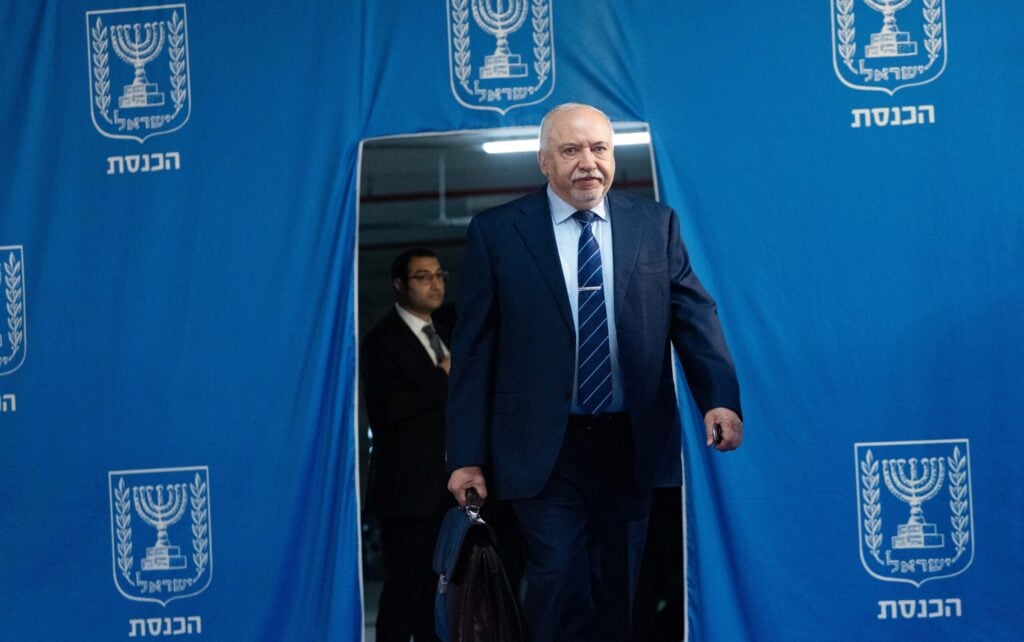
One of the major obstacles to a minority government is Yisrael Beytenu chairman Avigdor Lieberman. Lieberman has made clear that he will not take part in a government that relies on the support of the Joint List and Ra’am.