


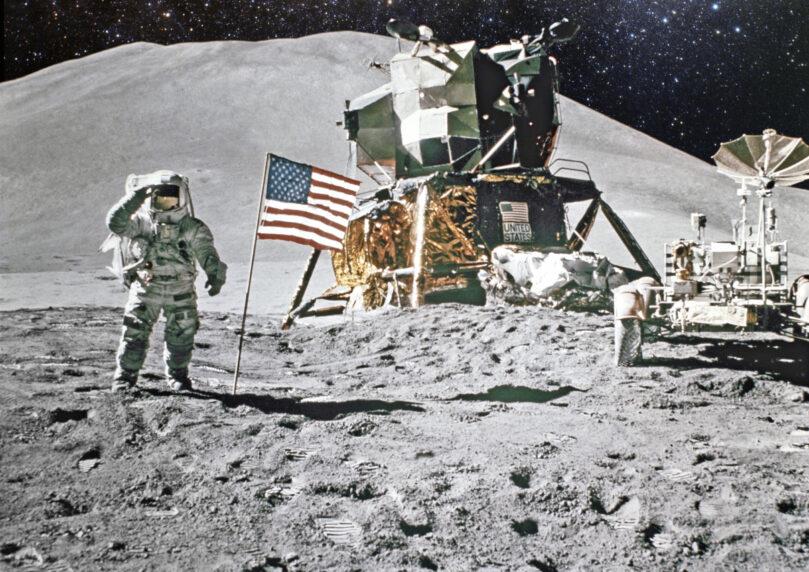

NASA is accelerating its lunar base project: The American space agency recently announced a major package of contracts and mission updates to expand the infrastructure, science, and research capabilities of the “Lunar Base” project, which will establish a permanent human presence at the Moon’s south pole. The plan includes robotic deliveries, advanced launch services, and development of an innovative nuclear-powered rover.


 2+
NASA made the announcement at the MAX POWER aerospace exhibition at Kennedy Space Center in Florida. “We’re building the lunar base mission by mission,” said NASA Administrator Jared Isaacman. “When astronauts return to the Moon, the first elements of a permanent outpost will be waiting for them on the surface.”
The Planned Project and Costs
To strengthen equipment delivery to the Moon, NASA selected eight leading American companies, including Blue Origin and SpaceX, to compete for future cargo missions under the Commercial Lunar Payload Services project. The companies will manage and operate landers that will carry science and technology payloads, under a 10-year framework contract worth up to $10 billion. At the same time, NASA expanded the first phase budget from $2.6 billion to $4.2 billion, enabling deliveries through 2033.
A central part of the plan is dedicated to developing PROMISE—a six-wheeled, nuclear-powered rover expected to launch to the Moon in late 2028 for an 18-month mission. The rover is designed to operate during the long lunar nights and in shadowed regions where ice is suspected. It will carry a drill to excavate lunar dust to a depth of one meter, along with temperature sensors, radiation detectors, and advanced cameras, to locate vital resources and map future landing sites.
 2+
Implementation Phases
Transferring these infrastructures requires a complex transportation network. Supply missions will fall into three main categories: testing navigation and communications systems in deep space, scanning the south pole with autonomous drones before humans arrive, and demonstrating commercial transfer capabilities on routes between Earth and the Moon. Some missions will launch aboard commercial rockets.
Meanwhile, NASA selected SpaceX to demonstrate an inter-lunar communications network. The company will launch communications satellites using the Starship spacecraft in 2028, linking astronauts, rovers and control centers on Earth. To provide power and communications on the surface, NASA is developing the CAST system, a miniaturized communications and energy tower that will integrate solar panels, advanced batteries and wireless power transmission hardware. Commercial companies were selected to supply the components, which NASA engineers will test and assemble in Alabama ahead of work beginning in the coming months.
 2+
The emerging lunar base represents the cornerstone of the Artemis program to establish a continuous human presence on the Moon. The base will serve as a vital laboratory for testing survival systems, resource extraction, and advanced technologies. The space agency views this project as the most important proving ground for the first crewed mission to Mars.