


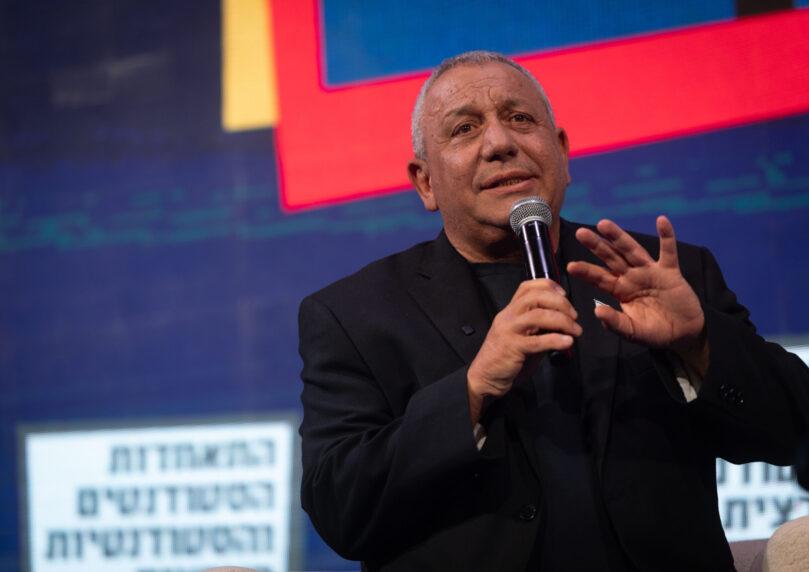

Likud filed an urgent petition Monday with the chairman of the Central Elections Committee for the 26th Knesset, Supreme Court Deputy President Judge Noam Solberg, against Gadi Eisenkot, chairman of the Yashar party, and his party. The petition follows a campaign in which envelopes that looked like official IDF draft notices were distributed nationwide but contained political propaganda.
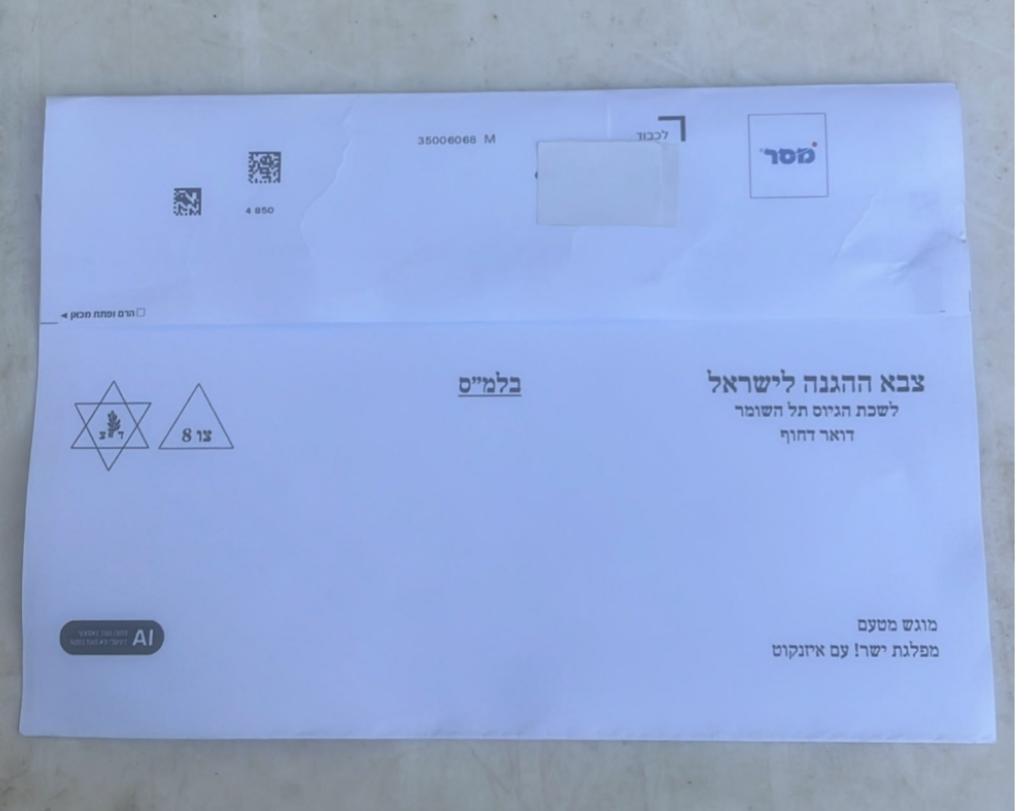

The petition was filed after reports in recent days of young people and their families who panicked upon receiving the letters, which were designed to resemble official military mail. According to Likud, some recipients believed they had received an emergency call-up order or Order 8, and only after opening the envelopes discovered they were campaign materials from Eisenkot’s party.
In the petition, filed through attorneys Ilan Bombach, Shai Levy, and Shaked Cohen, Likud argues the campaign violates election law provisions, including unauthorized use of IDF symbols and creating a misleading impression of a connection between the party and the military.
“This petition concerns election propaganda that is not satisfied with using IDF symbols and insignia contrary to their original purpose, but creates, through deception, an identity between the respondents and it,” the petition states.
מה זה הדבר הזה?!?!?!?! https://t.co/6KNrHAFlMC
— אחד האזרח🇮🇱דוד גבאי (@davidga6268) October 19, 2026
Likud argues the severity of the case is compounded by the fact that the letters were sent, to the best of their knowledge, only to soldiers. “The propaganda is sent to soldiers, and to the best of the petitioner’s knowledge, only to them, and is based on identifying them as such, while frightening them as if an emergency order (Order 8) awaits them in the envelope,” the petition states.
Another question raised in the petition concerns the source of information used to distribute the letters. Likud is seeking to clarify how the Yashar party obtained the personal details and home addresses of soldiers on active duty and reserves, and whether a database was used for the campaign. At this stage, no evidence has been presented that the information was obtained from military databases.
Following the allegations, Likud is asking the chairman of the Elections Committee to issue an immediate injunction prohibiting Eisenkot and his party from continuing to distribute the letters in any way, pending a decision on the petition.
As a reminder, Eisenkot’s party campaign sparked controversy in recent days after hundreds of thousands of letters were distributed to young people nationwide. In the letters, designed to resemble draft notices, recipients were told they must report for mandatory service of four years on election day.
The Yashar party explained that the move was intended to illustrate the consequences of the current government’s continued tenure. “Four years of mandatory service. Sounds like a bad movie? It will happen if the draft-dodging government is elected again,” the party’s message stated. At the bottom of the letter appeared a clarification in small print: “This is not real yet, but there is hope on the other side.”
The campaign drew criticism on social media, including from right-wing activist Yigal Malka, who claimed many young people thought the draft orders were real and even contacted recruitment offices. Malka also raised the question of how the soldiers’ details reached the party of the former IDF chief of staff.
Now, with the filing of the petition, the controversy surrounding the campaign moves to the Central Elections Committee, which will be required to examine the claims of unauthorized use of IDF symbols and misleading recipients.
Eisenkot’s Yashar party has not yet responded to the petition.