


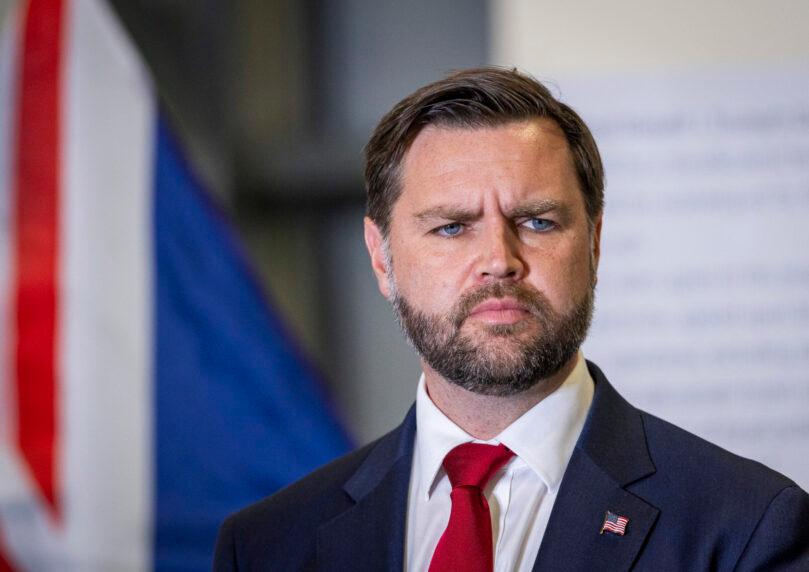

After paving his way as the leading candidate to succeed Donald Trump in the 2028 presidential race, Vice President JD Vance is now raising doubts about whether he’ll actually run. In an interview published Sunday with the New York Post, Vance said “there’s a chance” he’ll skip the race, claiming the decision depends largely on his family and his four young children.


 3+
Vance, who has built a central position in the Republican Party in recent months and become one of the most prominent names for the post-Trump era, said he’ll seriously consider his political future only after the midterm elections in November. At a CBS event in Michigan, he described himself as a “procrastinator” when it comes to major life decisions, and explained the weight of family considerations: “We have four young children. My wife has never liked politics—she likes public service.”
His wife, Usha Vance, has previously noted that she’s not professionally involved in politics and that the two sometimes hold independent and different positions. Despite the personal deliberation, Vance currently enjoys an exceptionally strong position in the party: according to data cited in the report, he leads Secretary of State Marco Rubio by 15% in primary polls for 2028. Still, his comments make clear that even his senior standing doesn’t guarantee he’ll ultimately step up to the starting line.
https://www.c14.co.il/article/1723140
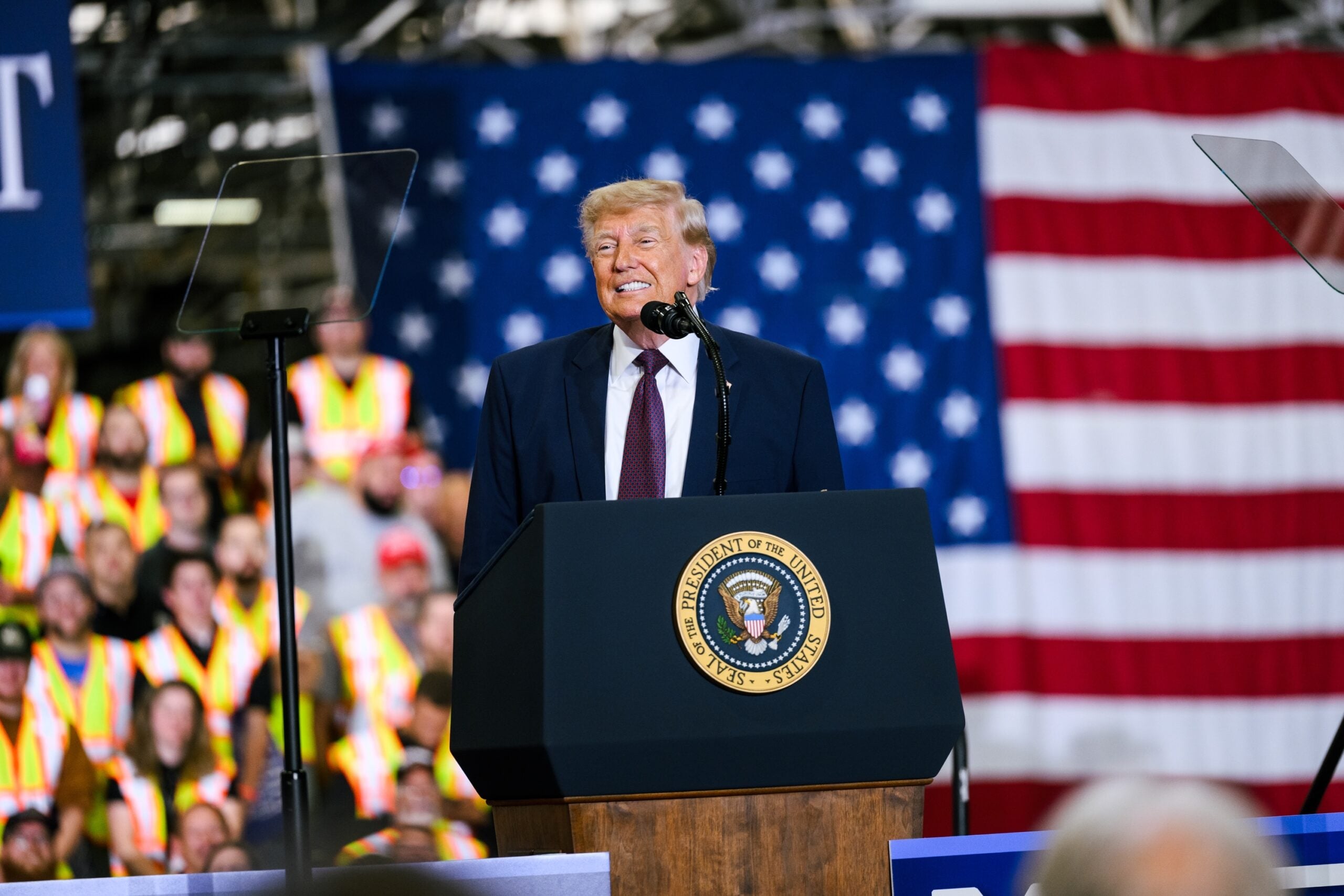
The possibility that Vance will skip the race comes after months in which he worked to establish himself as the leader of the Republican camp in the post-Trump era. The vice president hasn’t settled for his traditional role, but has deepened his involvement in the administration’s security and policy issues, positioning himself at the heart of the succession conversation amid early preparations and growing competition with other prominent names, including Rubio and senior senators.
 3+
One striking expression of this was his direct—perhaps overly direct—involvement in national security matters. In the early days of the war with Iran in March, Vance reached out to senior military and security officials and requested comprehensive, independent briefings, ostensibly to advise the president “optimally.” The move was made with the knowledge and approval of Trump, Defense Secretary Pete Hegseth, Marco Rubio, and Chairman of the Joint Chiefs of Staff General Dan Cain. During the briefings, he was presented with alarming data regarding the ammunition shortage facing the U.S. military.
https://www.c14.co.il/article/1699587
At the same time, Vance has been described as someone seeking to delve into details and get to know the ground-level work firsthand. According to reports, CIA Director John Ratcliffe gave him relatively broad access to field agents with whom he spoke independently, and Defense Secretary Hegseth ordered that he receive a comprehensive daily report on activity in the Strait of Hormuz. This involvement strengthened his presence at the top of the administration and gave him exposure to core issues that may be central to the next election cycle—but it doesn’t guarantee he’ll choose to translate that into an actual candidacy.
The path to establishing his position has also been marked by friction within the party. In recent weeks, a public confrontation developed between him and Senator Ted Cruz of Texas, after the vice president hinted that Cruz is focused on the 2028 race instead of the upcoming midterms. In an interview with Politico, Cruz called Vance “insecure” and rejected the claims. Cruz, who came in second in the primaries against Trump in 2016, already made clear in August that he’ll “definitely be part of the conversation” heading into 2028.
 3+
Vance, for his part, told NBC: “It’s very clear to me that right now, Ted Cruz is running for president. Right now, I’m not. I’m trying to help elect Republicans.” Cruz responded that he’s entirely focused on the midterms and working for Republican candidates, just as he helped Vance himself in the 2022 Ohio Senate race. The confrontation illustrated the high tension surrounding preparations for the post-Trump era, and the battle for influence in a party where the succession question remains unresolved.
Alongside this, the central rivalry linked to Vance’s name has been with Secretary of State Marco Rubio. Recently, it was reported that Rubio said in closed conversations that he doesn’t plan to run in 2028—a move that could have paved a smoother path for Vance to lead the party.
The battle over the Republican Party’s future isn’t just about the candidate’s identity, but also about the policy and ideological line it will adopt in the post-Trump era. Vance is identified with a conservative-populist line that’s skeptical of prolonged American military involvement overseas, and on several occasions has drawn sharp criticism in Israel for his statements on Iran and the Middle East.
In contrast, Rubio presents a far more hawkish line toward Tehran, and has previously expressed firm opposition to British measures against Jews in Judea and Samaria. These fundamental differences make the question of Trump’s successor an issue of strategic significance for Washington-Jerusalem relations as well. Now, after establishing his senior position, Vance is signaling that the path to the White House isn’t a final destination that’s been decided.
 3+
The decision will be postponed at least until after the midterm elections in November, with family considerations remaining at the center of the deliberation. The big question is whether this is merely temporary hesitation and a new tactic, or a real possibility that the vice president will skip the race—and reshuffle the deck in the battle for the 2028 succession.