



Iran is preparing operational plans for an unprecedented retaliatory strike if the United States renews large-scale attacks against it, Reuters reported Thursday, citing three senior Iranian officials and a source involved in security discussions.
According to the report, Iran’s military leadership has decided that any future response will not be symbolic, but will significantly expand the target bank—including direct strikes on American interests outside the Middle East and attacks on countries providing support for Washington’s military operations.


 3+
3+Since Iranian President Masoud Pezeshkian returned from the UN General Assembly in New York last week, the regime’s leadership has been holding a series of intense discussions about the scope and timing of a military response in the event of a preemptive American strike. Sources involved in the details said two of the senior Iranian officials confirmed that operational orders have already been transmitted to Tehran’s proxies in Lebanon, Yemen and Iraq. The explicit directive is to prepare for a coordinated, multi-front regional assault stretching “from the Strait of Hormuz to American assets and interests in the region and beyond.”
 3+
3+Hamid Reza Azizi, a senior Iran researcher at the International Crisis Group, told Reuters that Tehran’s leadership doesn’t know with certainty whether President Donald Trump will order a full-scale campaign or targeted strikes against nuclear facilities. Still, he believes the Iranians are determined not to respond in a measured way: “They appear determined to escalate in hopes of re-establishing the deterrence equation.”
Alongside the military threats, Tehran is trying to keep diplomatic channels open, mainly due to the choking economic distress and the American naval blockade that has devastated oil exports. In New York, Iran submitted a proposal through Qatari mediators for a seven-day ceasefire and the opening of the Strait of Hormuz, in exchange for lifting the blockade on its ports, releasing at least $12 billion of its frozen funds, and granting exemptions from oil sanctions.
 3+
3+Trump rejected the proposal, and Washington is demanding that any future arrangement include dismantling the nuclear program—a condition Iran refuses to accept. Alex Vatanka, director of the Iran program at the Middle East Institute, emphasized that continuing the blockade could “take the oxygen out of the regime’s lungs,” making military escalation a very real possibility.
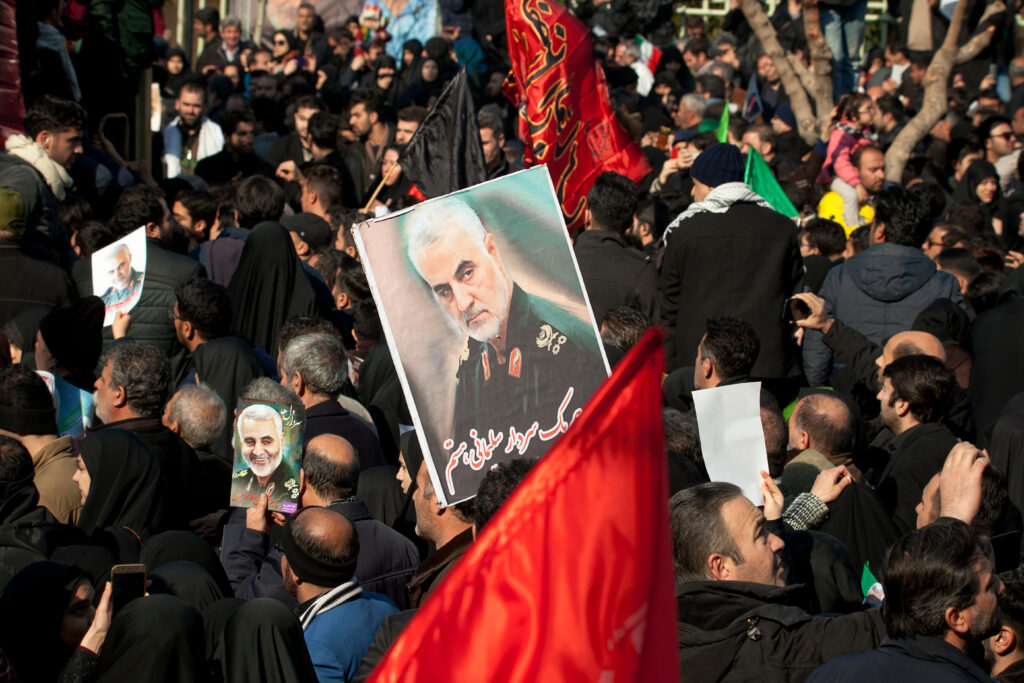
Facing external military pressure, Iran’s leadership is increasingly worried about an internal explosion and a return of the massive protests that erupted last January following the economic collapse. A former reformist official noted that dealing with civil unrest during American bombing could directly threaten the survival of the religious establishment.
 3+
3+Ahead of the anniversary of the unrest, the regime has intensified repression: UN and Amnesty International reports point to an unprecedented wave of mass arrests—more than 6,000 detainees since the conflict began, torture, and a spike in executions to prevent a popular uprising.