



The attempted terror attack aboard flydubai Flight FZ1073 from Dubai to Israel on Wednesday morning triggered the immediate scrambling of Israeli Air Force (IAF) fighter jets following emergency transponder alerts broadcast from the cockpit. Israeli defense authorities formally classified the incident as an attempted terror attack following rapid situational assessments and initial debriefs with passengers, which indicated that the first officer stabbed the captain in a bid to seize the controls and deliberately crash the aircraft.
 2+
Against the backdrop of the incident, the Israeli Air Force routinely trains and drills dedicated operational orders tailored specifically to confront severe contingencies involving inbound commercial airliners. The protocol is engineered to prevent airborne 9/11-style mass-casualty attacks and ensure rapid kinetic and defensive options when an incoming civil aircraft is suspected of posing an imminent threat to sovereign Israeli territory.
An operational scramble can be triggered by a sequence of abnormal tactical indicators: an aircraft abruptly deviating from its assigned flight corridor, failing to respond to civilian or military air traffic control radio frequencies, or transmitting an emergency distress squawk code. The contingency order can also be initiated due to severe mechanical failures or sudden medical emergencies incapacitating crew members and requiring emergency diversion.
 2+
Once the protocol is activated, rigorous aerial defensive measures take effect. Depending on the evaluated threat level, Israeli airspace can be shut down entirely, while ready-alert fighter jets are scrambled to visually identify, intercept, and escort the civilian aircraft. Throughout the event, the IAF command post, civil aviation authorities, and intelligence branches conduct continuous joint assessments until the circumstances are fully clarified and the security threat is eliminated.
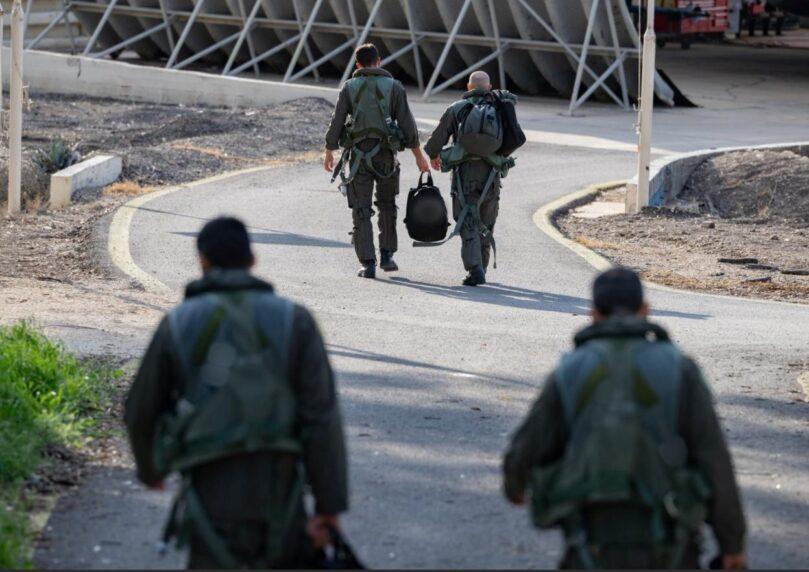
Israel’s rapid aerial response capability relies on an uninterrupted real-time Recognized Air Picture (RAP), layered radar monitoring, and squadrons maintained on immediate tarmac alert. IAF air defense formations and fighter wings operate around the clock to detect flight anomalies and airborne threats, retaining the ability to launch interceptors within minutes of an alert.
 2+
During simulated exercises, aircrews and ground controllers are trained to transition within moments from flagging suspicious maneuvers to synthesizing intelligence and applying the appropriate response envelope. The doctrine emphasizes early threat identification, rapid dissemination of actionable tactical data, and decisive real-time command decisions.
Nevertheless, activating these contingency intercept orders does not always point to a hostile terror hijacking. The operational protocol is periodically triggered by routine communications blackouts, avionics malfunctions, accidental route deviations, or human error by commercial flight crews. For the Israeli Air Force, however, every anomalous aerial event approaching Israeli airspace is treated as an active emergency until comprehensive ground verification removes all doubt.