



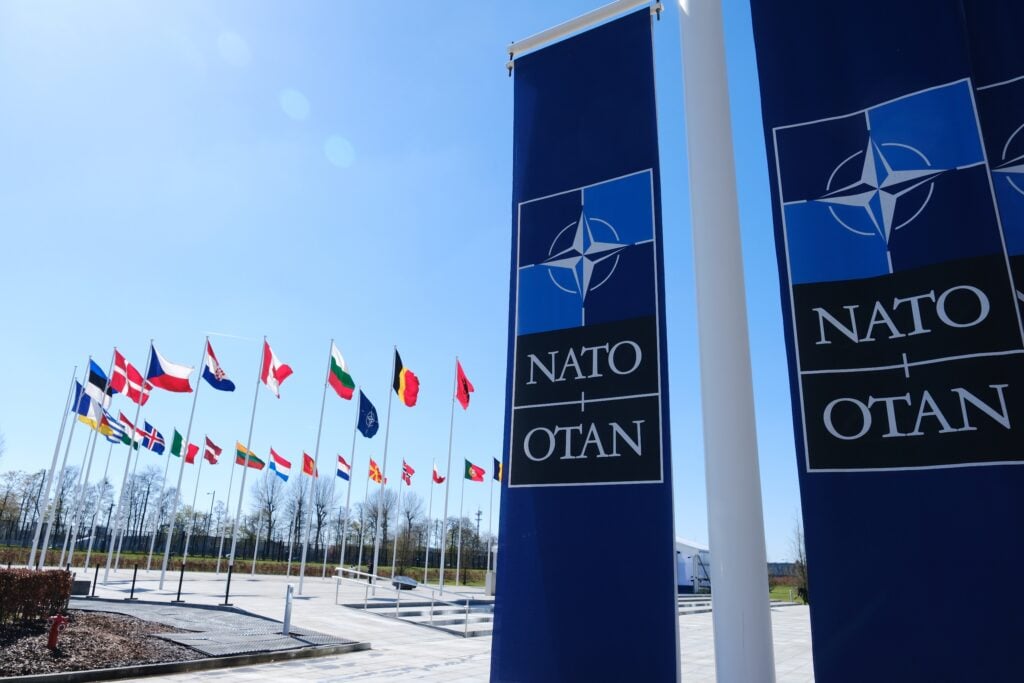
Leaders of the NATO alliance and the European Union issued a joint, severe warning to Moscow on Thursday, announcing preparations for coordinated retaliation against what they termed an aggressive and dangerous pattern of Russian operations on European soil. European Commission President Ursula von der Leyen and NATO Secretary General Mark Rutte underscored that the explosive drone assault targeting Germany’s Leipzig/Halle Airport constitutes the crossing of a red line, marking an acute new phase in the Kremlin’s hybrid campaign against the West.

 3+
3+The German government announced Tuesday that police investigations and intelligence assessments proved Russia orchestrated an August 4 attempt to strike a Ukrainian cargo aircraft using an explosive-laden unmanned aerial vehicle (UAV), neutralized on-site by an explosive ordnance disposal robot at Leipzig/Halle Airport. A second drone reportedly struck an additional cargo aircraft, while a third drone was discovered in the area ten days later.
The airport serves as a critical strategic logistical hub for NATO and is utilized continuously by Ukrainian Antonov heavy transport aircraft. The German Interior Minister confirmed that the drone’s structural design, internal components, explosive payload, and detonation mechanisms match identical signatures from previous Russian hybrid operations. Two suspects have already been identified: a Belarusian national holding a Russian passport who entered on a tourist visa, and another individual carrying Latvian and Russian passports who flew into Berlin and departed two days prior to the botched attack.
 3+
3+In response, Berlin ordered the immediate closure of the Russian consulate in Bonn alongside the shutdown of the “Russian House” cultural institute in Berlin, long suspected of serving as a Kremlin propaganda front. Moscow denied the findings, alleging an absence of concrete evidence. Russian Foreign Minister Sergey Lavrov retaliated by announcing the closure of Goethe-Institut cultural branches in Moscow, Saint Petersburg, and Yekaterinburg. Russian President Vladimir Putin branded Germany’s steps a grave error running contrary to the interests of its people, while Deputy Foreign Minister Alexander Grushko replied “perhaps” when asked whether Moscow was prepared to sever diplomatic ties with Berlin entirely.
Commission President von der Leyen took a firm line on the incident: “Leipzig marks a new escalation on European Union soil directly attributable to Russia… This involved military-grade materials operated by Russian agents. We will not tolerate it, and we must respond to Russian recklessness faster and more effectively.”
 3+
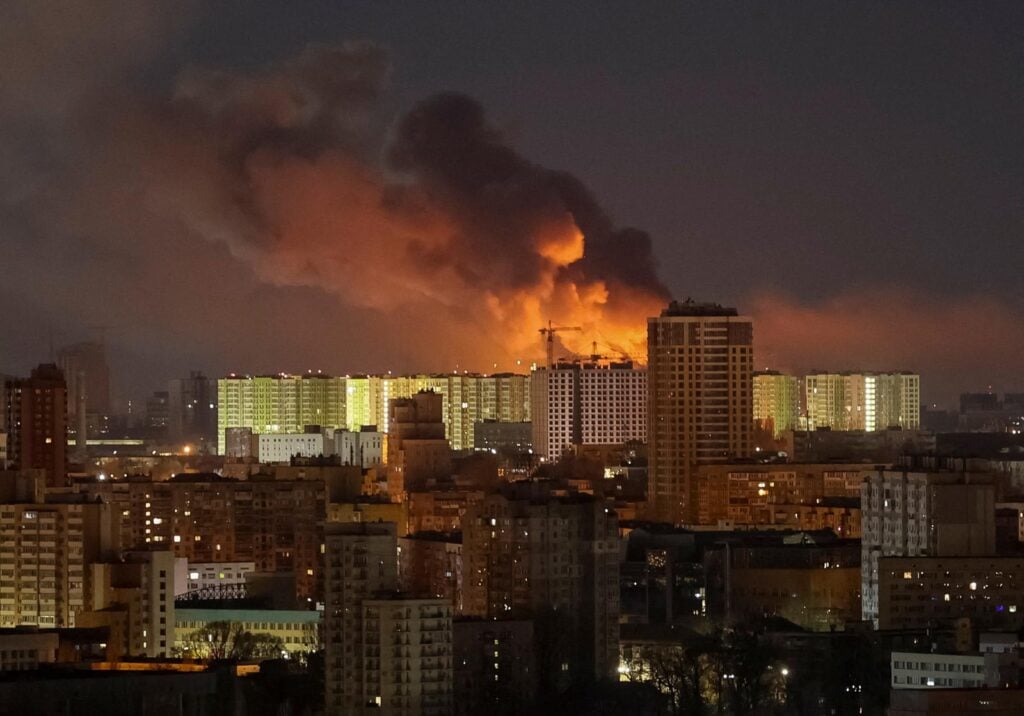
3+NATO Secretary General Mark Rutte stressed that the alliance stands in full solidarity with Germany, warning of compounding security threats: “There is an increasing risk to Europeans from drone and missile incursions into eastern flank nations, and we are witnessing intensified malicious activity directed straight into our territory—from arson attacks at facilities manufacturing defense supplies for Ukraine to the Russian hybrid attack in Leipzig.”
At the same time, suspected sabotage operations are mounting across the continent. In Germany, two electrical substations were hit—one in the east and another in the west near Cologne. In Bergheim, damage to high-voltage lines forced the shutdown of five generating units across two coal-fired power stations, and police located six launching arrays in an adjacent field. North Rhine-Westphalia Interior Minister Herbert Reul noted investigators are actively probing state-sponsored sabotage alongside extreme-left actors. Additional damage was inflicted on high-voltage power lines near a lignite switching station in Brandenburg, where explosive devices were recovered. In Poland, Prime Minister Donald Tusk declared that a fire at a combat drone production plant in Skarżysko-Kamienna was the result of deliberate arson and sabotage, alongside a parallel probe into a suspicious fire at an industrial facility in Lublin.
 3+
3+European Union foreign ministers convened in Ireland to advance coordinated enforcement measures, including sweeping restrictions on the maritime “shadow fleet” Russia uses to evade crude oil sanctions, tighter tourist visa protocols, and barring entry to Russian military veterans. France, Belgium, and the Netherlands additionally summoned Russian ambassadors for formal diplomatic reprimands.
Economically, member states including Sweden, the Netherlands, Poland, and Spain are ramping up pressure to unlock over €193 billion in frozen Russian sovereign assets to finance Ukraine—an initiative that began in late 2025 and has faced pushback from Belgium over legal liability concerns. Alongside an existing €90 billion loan facility for Kyiv, von der Leyen revealed that Ukraine has requested billions more to procure PAC-3 air defense interceptors, while confirming ongoing development of Project Freyja—a joint European-Ukrainian ballistic missile interception network intended to ratchet up systemic pressure on Moscow until its forces withdraw.