




Six months after launching high-intensity combat operations against Iran, the U.S. Department of Defense is quietly extending deployments for tens of thousands of troops across the Middle East—a decisive signal that the military confrontation will drag deep into next year and likely well into 2027.
The move, first reported Thursday by The Wall Street Journal, directly diverges from Secretary of War Pete Hegseth’s initial vision of a swift, surgical campaign. It places historic pressure on service branches as the Trump administration juggles conflicting tracks: exploring offensive ground escalation plans while probing whether total economic strangulation can dismantle the regime without endless fire missions.

 5+
5+The American military footprint in the region now encompasses approximately 50,000 service members, advanced air-defense battalions, fighter wings, paratroopers, and 19 warships—including two nuclear aircraft carriers and 13 guided-missile destroyers. Forward elements maintain grueling operational tempos intercepting Iranian ballistic missiles and suicide drones, escorting commercial sea-lanes, enforcing an airtight naval blockade on Iranian ports, and sustaining continuous strike-package readiness.
The endless deployment is extracting a severe physical and operational toll. Army air defense crews have seen standard nine-month rotations stretched to a full year, with battalions redeployed from European and Indo-Pacific theaters now on the ground for more than 12 consecutive months.
 5+
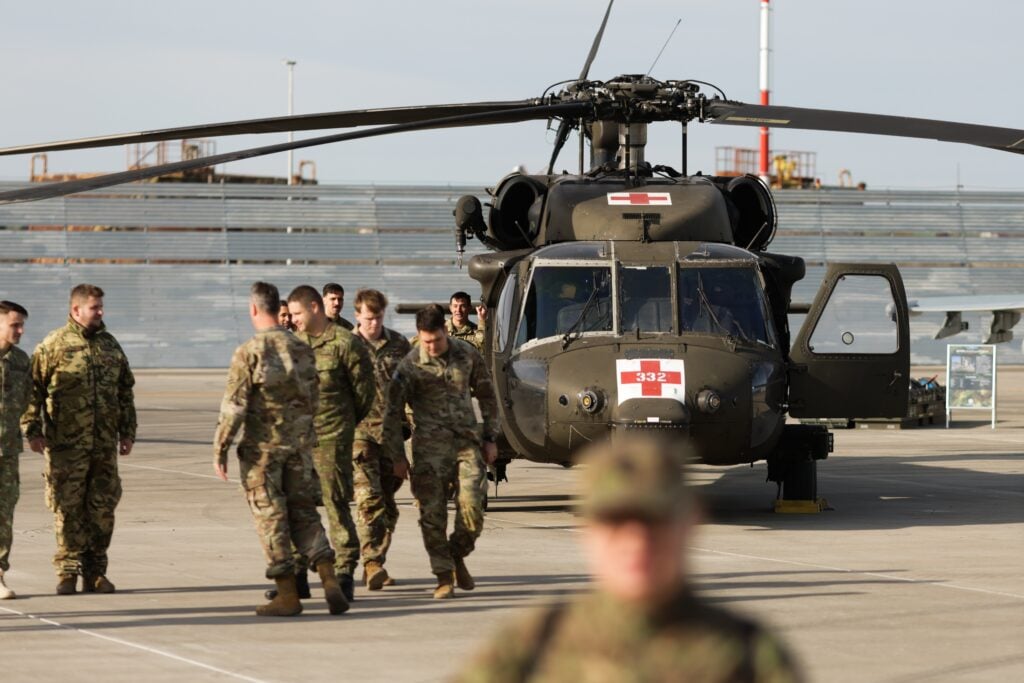
5+Tom Karako, Director of the Missile Defense Project at the Center for Strategic and International Studies (CSIS), highlighted the systemic costs: “The operational tempo of air defense units before this conflict was already among the most severe across the joint force. Extended deployments risk running forces into the ground, deferring critical maintenance overhauls, and undermining long-term modernization trajectories.”
At sea, guided-missile destroyers including the USS Delbert D. Black and USS Spruance have operated continuously for months without standard liberty port calls. The war has generated some of the longest naval operational deployments in modern fleet history: the USS Gerald R. Ford operated at sea for 11 months before returning stateside in May—the longest carrier deployment since the collapse of the Soviet Union.
 5+
5+While the USS Abraham Lincoln heads home after an exhaustive mission, the crew of the USS Theodore Roosevelt is completing final readiness exercises, gearing up for a deployment expected to anchor it in Middle Eastern waters deep into the spring. Combat operations have also stripped the Navy of the ability to reprovision at frontline regional commercial ports, forcing logistical dependence on the remote joint U.S.-UK base on Diego Garcia in the Indian Ocean. The isolation has triggered severe mail backlogs, denied crews rest cycles off ship, and accumulated years’ worth of deferred depot maintenance.
 5+
5+Simultaneously, commanders of the 82nd Airborne Division sent an official letter directly to soldiers’ families, preparing them for deployments lingering well into 2027: “We do not share this lightly, and we recognize that prolonged operational service places immense weight on every home and family, including our own.”
The open-ended deployment unfolds amid strategic ambiguity. Senior national security aides have warned President Trump that further military escalation could carry political liabilities for Republicans ahead of the November midterm elections. However, Trump has repeatedly insisted electoral calculus will not dictate combat strategy. In closed consultations, the President has explored declaring victory on the premise that total economic asphyxiation will trigger regime collapse or force the capitulation of Tehran’s nuclear program.
 5+
5+On public networks and in interviews, Trump projected unyielding confidence: “I like our position right now much better, with near-total control over the Strait of Hormuz, and their economy is in absolute freefall. They are merely delaying the inevitable. When will the Iranian people rise and fight?” Trump told reporters on Wednesday: “We are ready to deliver additional strikes whenever we choose. We see everything they do. They can’t even go to the bathroom without us watching.”
Despite talk of wrapping up kinetic phases, Trump received comprehensive military briefings last month outlining decisive offensive options: expanding heavy strategic bombing, landing ground assault forces to seize strategic Iranian islands controlling the Strait of Hormuz, and destroying a fortified subterranean nuclear complex known as “Pickaxe Mountain.”
 5+
5+Strategically, anchoring massive military power in the Middle East for the long haul forces a reordering of global priorities. As Bryan Clark, senior fellow at the Hudson Institute and former naval officer, explained: “They are digging in to sustain this posture long-term, deep into next year. But holding that line means stripping assets from other theaters worldwide. The United States is effectively going all-in, turning the confrontation with Iran into the sole focal point of its military deployments for the year ahead.”
The policy leaves the U.S. military locked in relentless tension: tying down immense naval and air power against the Iranian regime at the direct expense of European deterrence and Pacific readiness, all while civilian leadership weighs whether to execute amphibious ground invasions and bunker-busting strikes, or bank on financial ruin to bring down the Ayatollahs from within.