


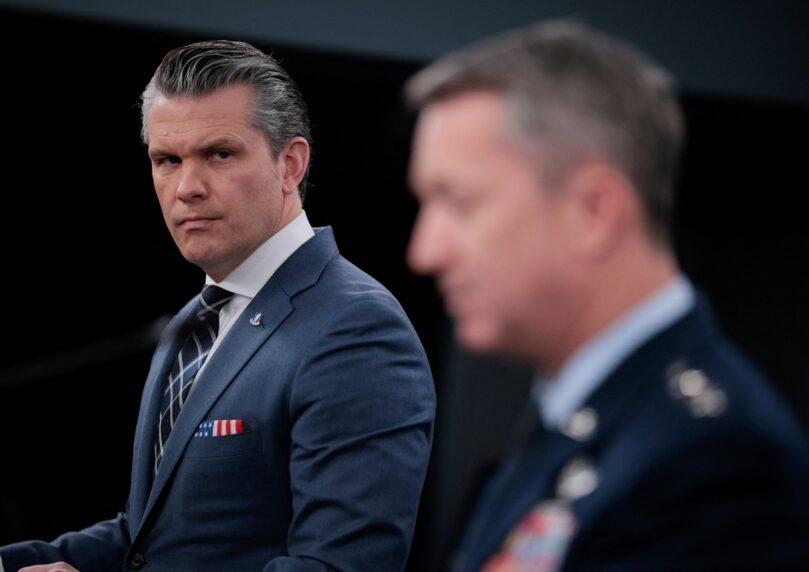

While framed as a standard and cordial political departure, the abrupt exit of outgoing U.S. Army Secretary Dan Driscoll signals an acute institutional crisis inside the Pentagon. Driscoll released his first public statement on Tuesday evening since tendering his resignation, confirming that tomorrow will mark his final day after a tumultuous 18-month tenure—unfolding at the height of an active global military confrontation.

 3+
3+In a formal statement posted to the official Secretary of the Army X account, Driscoll—a third-generation military veteran—projected institutional unity and praised the man with whom he reportedly clashed repeatedly, Secretary of War Pete Hegseth: “As a third-generation combat veteran, it has been the honor of a lifetime to serve as Secretary of the Army under President Trump and Secretary Hegseth. Tomorrow is my final full day in office.
“The soldiers, civilians, and their families are the finest our nation has to offer, and they inspired me every single day. I had the privilege of working alongside them to accelerate and modernize how the Army recruits, trains, and equips the most lethal fighting force on earth. We could not have achieved this progress without Secretary Hegseth’s support. I am deeply grateful to President Trump for the opportunity to serve my country once again.”
 3+
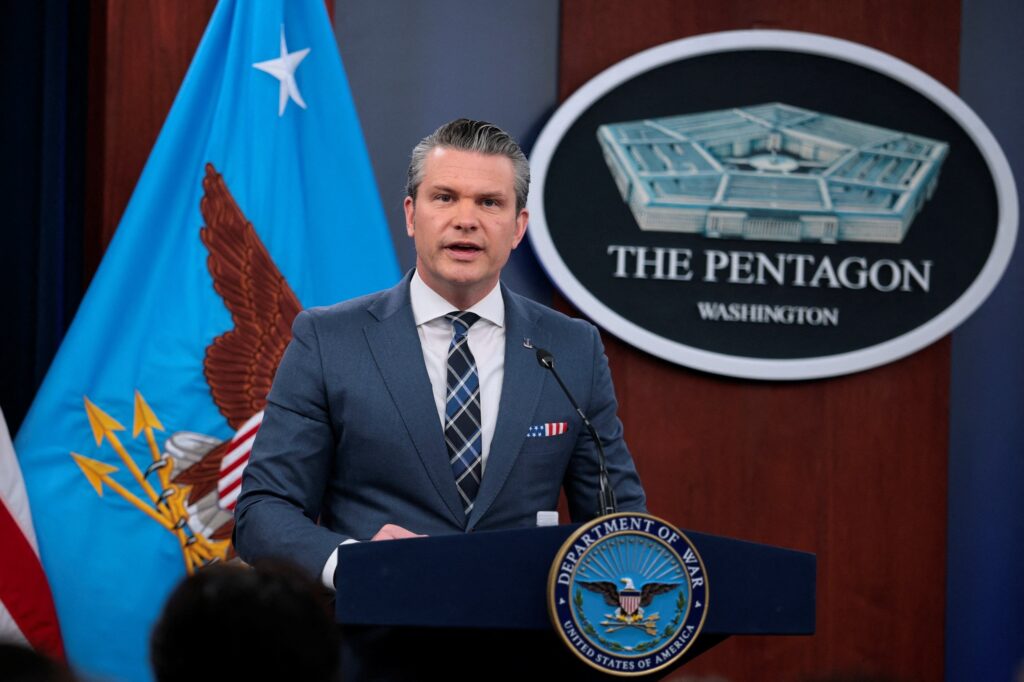
3+The White House moved swiftly to back Driscoll and laud his accomplishments. In an official statement released Monday, administration officials noted that Driscoll worked with “extraordinary effectiveness to advance President Trump’s agenda to restore American strength in the Department of the Army through distinguished leadership during historic military operations, restoring a relentless focus on readiness and lethality, and supporting negotiations between Russia and Ukraine.” White House spokeswoman Anna Kelly added in a statement to the AP that “the United States Army is stronger than ever thanks to his dedicated partnership with the Commander-in-Chief and the Secretary of War.”
However, the warm public statements mask deep, irreconcilable fissures. A source familiar with internal deliberations told Fox News that Driscoll voiced severe alarm to senior administration leadership regarding Army transformation, modernization timelines, and combat readiness levels, explicitly warning that Hegseth’s policy moves were directly obstructing these efforts.
 3+
3+However, the warm public statements mask deep, irreconcilable fissures. A source familiar with internal deliberations told Fox News that Driscoll voiced severe alarm to senior administration leadership regarding Army transformation, modernization timelines, and combat readiness levels, explicitly warning that Hegseth’s policy moves were directly obstructing these efforts. Internal friction reached a breaking point following an unprecedented series of leadership purges orchestrated by Hegseth across the top brass, spearheaded by the abrupt dismissal of the Army’s highest-ranking uniformed officer—Chief of Staff of the Army, Gen. Randy George.
 3+
3+Driscoll’s departure carries heavy political and personal weight within the administration: he is an intimate ally of Vice President J.D. Vance, and the two attended Yale Law School together after their military service. Throughout his 18 months in office, Driscoll leveraged direct ties with Silicon Valley defense-tech firms to rapidly overhaul the Army’s tactical drone, counter-UAS, and autonomous systems portfolios for high-intensity modern warfare.
The timing of the resignation makes it extraordinarily volatile: it lands over six months into the war against Iran, precisely as active combat operations against Tehran enter an intense new operational phase. Driscoll’s exit leaves the Department of the Army without permanent civilian leadership, without a confirmed Chief of Staff, and with an embattled Pentagon hierarchy forced to manage a complex, multi-theater war.