


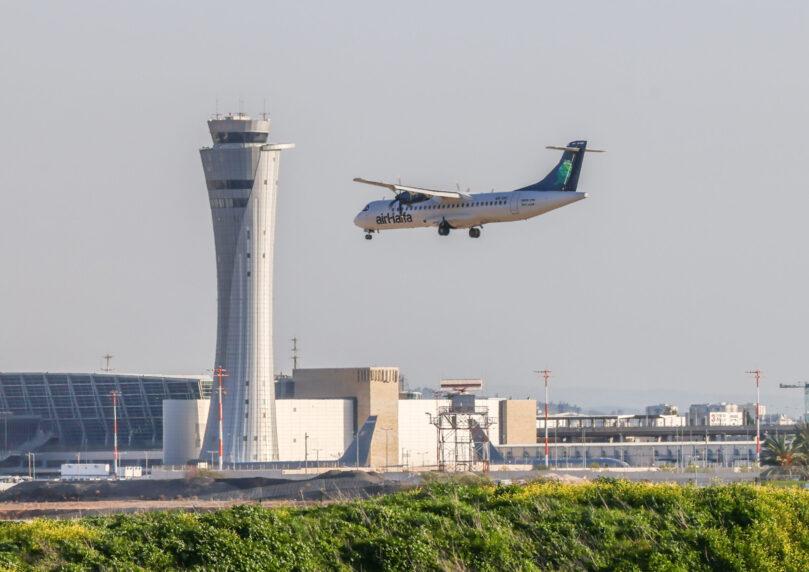

Ben Gurion Airport is approaching its capacity ceiling while construction of additional airports keeps getting delayed. Treasury officials are warning that without expanded infrastructure, demand could outstrip Israel’s ability to supply flights in less than a decade—and prices could spike.


 2+
2+According to Treasury Ministry data, Ben Gurion currently handles about 30 million passengers a year. Even after the Israel Airports Authority completes its expansion plan—a roughly ₪7 billion project—capacity is expected to grow to only about 40 million passengers annually. That’s projected to be enough only until 2034.
The impact on travelers could be felt acutely. Without significant added capacity, the number of flights to and from Israel will be more limited, especially during peak travel periods. Fewer flights mean less competition among airlines and could lead to higher prices.
The price increases are already showing up in the market. According to Treasury figures, over the past two and a half years airfares to Paris have risen 47%, to Dubai 51%, and to New York 33%. Treasury officials warn that without a substantial addition of aviation infrastructure, pressure on prices could continue.
 2+
2+The problem is that building a new airport isn’t a solution that can be implemented within a few years. According to estimates, it takes about two years for planning, another two years for the tender process, and about six years for construction. All told, that’s roughly a decade until the first phase of a new airport becomes operational.
Two alternatives are being advanced in parallel: an airport at Ramat David in the north, with maximum capacity estimated at about 35 million passengers a year, and an airport at Tzkelag in the south, planned for a capacity of about 10 million passengers annually. Treasury officials argue that a southern airport alone won’t meet future demand and therefore both airports need to be advanced.
One of the central disputes holding up the move is the question of who will operate the airports. The Finance Ministry and Transportation Ministry want to allow private companies to participate in construction and operation, while currently the Israel Airports Authority is the body that operates airports in Israel.
 2+
2+The bill designed to enable the private model passed a first reading but was later split off from the Arrangements Law and transferred to regular legislative proceedings in the Economics Committee. Treasury officials claim the split is delaying further planning and tender processes.
For the Israeli traveler, the question isn’t just where the next airport will be built, but how much it will cost to fly in a few years. If Ben Gurion reaches its capacity ceiling before the additional airports are ready, flight supply will be more limited, and competition could suffer.
That’s why Treasury Ministry officials are warning that time is running out: even if decisions are made right now, building a new airport is expected to take years. Without rapid advancement of infrastructure, Israel could find itself in the next decade with more passengers wanting to fly—but not enough flights to meet the demand.