


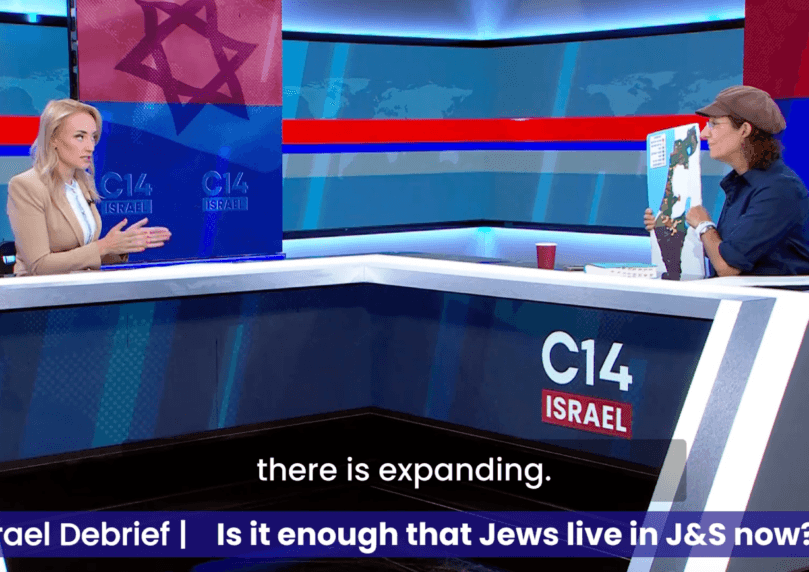

Nadia Matar, co-founder of the Sovereignty Movement, told C14’s Israel Debrief that Israel’s failure to apply full sovereignty over Judea and Samaria after 1967 was the central unresolved mistake of modern Israeli history, and that the war Israel now faces cannot be separated from that failure. Matar said the 1967 war was a decisive military victory that was never sealed with a matching diplomatic decision.
https://youtu.be/CQASxh_Wz7YShe said the government of the time chose to place the newly returned territory under military administration rather than extending Israeli civil law, leaving Judea and Samaria in a different legal category from the rest of the country. She credited the early settlement movement, led by figures including Rabbi Moshe Levinger and Rabbi Hanan Porat, with responding to that gap by establishing Jewish communities in the area. She noted that the Hebrew term for these communities, “mitnahlim,” derives from the word for inheritors, and said the common English translation of “settlers” understates their historical claim to the land.

 2+
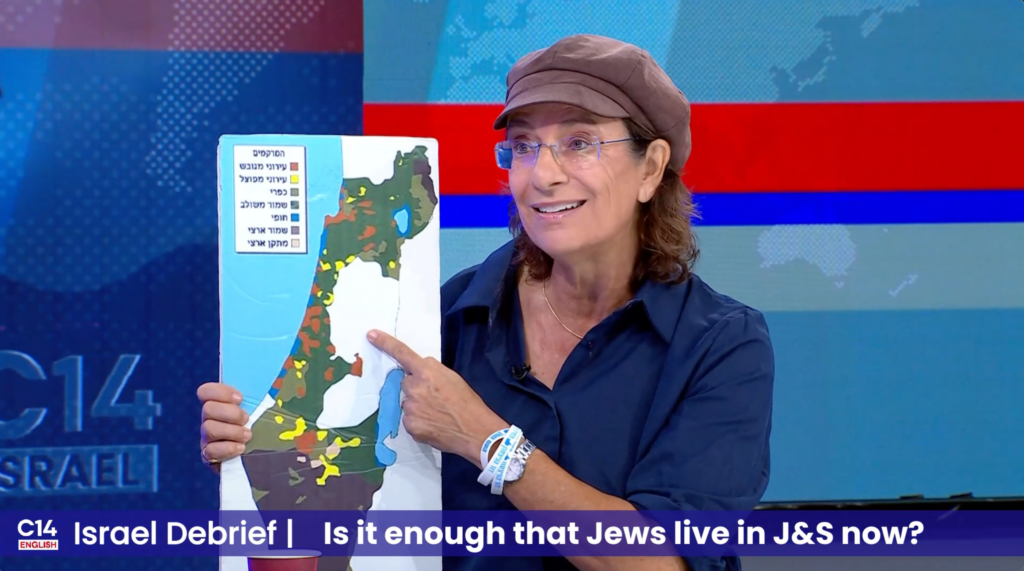
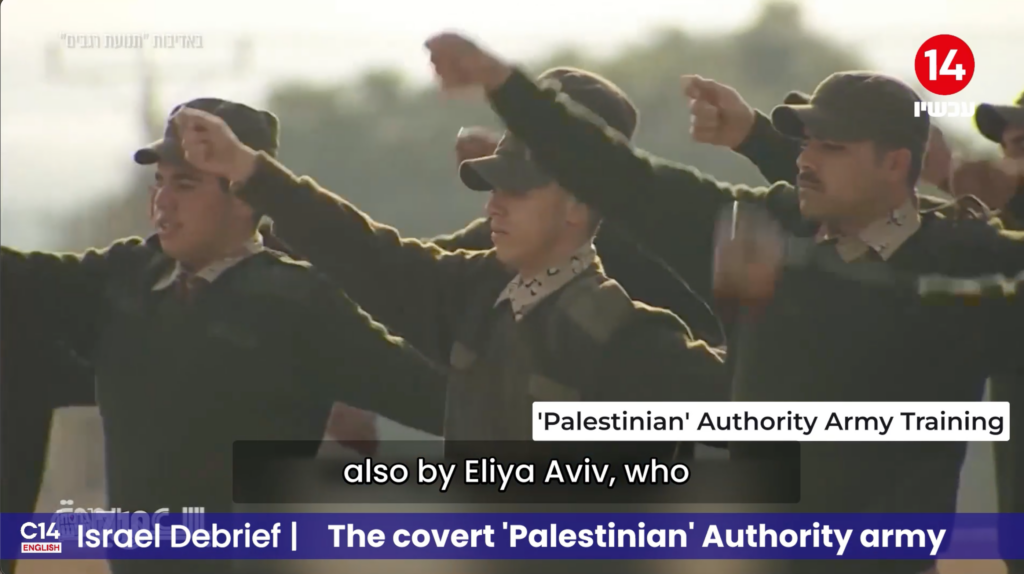
2+Matar pointed to the gaping white space in Israel’s 2026 national outline plan as evidence that the state still has no long-term designation for Judea and Samaria despite the presence of close to 750,000 Jewish residents there. She said this absence of formal status sends a message to the world, and to Israel’s enemies, that the area’s future remains undecided, and opens up Israel’s flank to eventually be attacked head on by a growing, covert ‘Palestinian’ army, already 70,000 fighters strong.
On the subject of arms, Matar traced the presence of weapons in ‘Palestinian’ Authority hands to the 1993 Oslo Accords, under which Israel authorized what she described as roughly 10,000 to 12,000 firearms for the “mass murderer” Yasser Arafat’s forces. She said that number has since grown to an estimated 70,000 trained personnel, a figure she attributed to research by the Regavim movement. Matar told me about a recent Knesset hearing convened by MK Tzvi Sukkot, which was closed to media. She said a representative of the military declined to answer questions at that hearing about the scale of the buildup. Matar connected this growth to a recent Channel 14 film by Eliya Aviv, which she said documents ‘Palestinian’ Authority military training exercises for the first time. She called for a formal commission of inquiry into the Oslo Accords, citing the deaths of Israelis in terror attacks she attributes to the agreements.
 2+
2+On law enforcement, Matar welcomed Defense Minister Israel Katz’s recent decision to transfer civilian policing responsibility over Israeli residents of Judea and Samaria from the IDF to the Israel Police. She described the move as a significant, if partial, step toward sovereignty, since it shifts enforcement from military to civilian authority for the first time in nearly six decades. She said the Sovereignty Movement is calling for this same civilian policing authority to be extended to the Arab population of the area as well, which she said would further weaken the ‘Palestinian’ Authority’s role and move Israel closer to what she called full, formal sovereignty rather than the current de facto arrangement.
Matar argued that settlement alone, without a formal declaration of sovereignty, cannot secure the area permanently, comparing continued building without sovereignty to “emptying the sea with a spoon.” She said formal sovereignty would also unlock economic investment, pointing to the absence of any hotel in Judea and Samaria as evidence that major companies view the area’s status as reversible. Asked how sovereignty would affect Jews outside Israel, Matar said it would create space for increased immigration to Judea and Samaria and, eventually, to Gaza. She said she opposes any postwar plan for Gaza that would leave Hamas or a successor Arab authority in place, arguing instead that Gaza should be rebuilt under Jewish control.
 2+
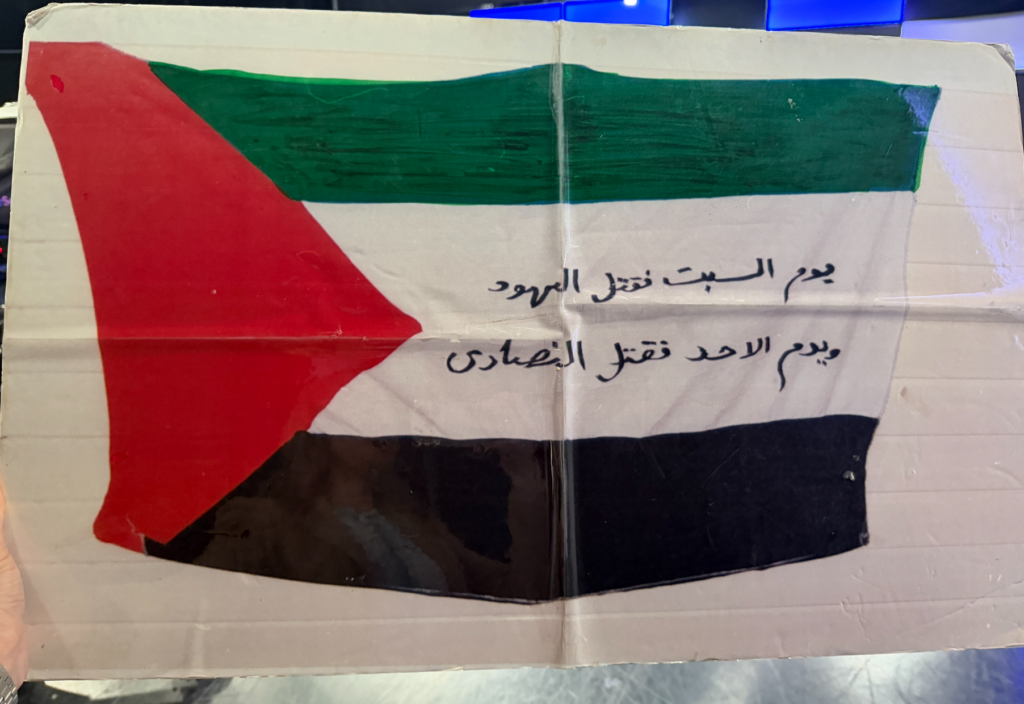
2+Matar closed the conversation by describing what she called a broader civilizational conflict, referencing a banner she said was flown in Bethlehem in the early 1990s, with a PLO flag inscribed in Arabic with “On Saturdays we will murder the Jews, and on Sundays, we will murder the Christians.” She cited polling she said shows a majority of the Jewish Israeli public now supports the application of Israeli sovereignty and framed her movement’s long campaign, alongside co-chair Yehudit Katsover, as a continuation of the founding work of David Ben Gurion.