


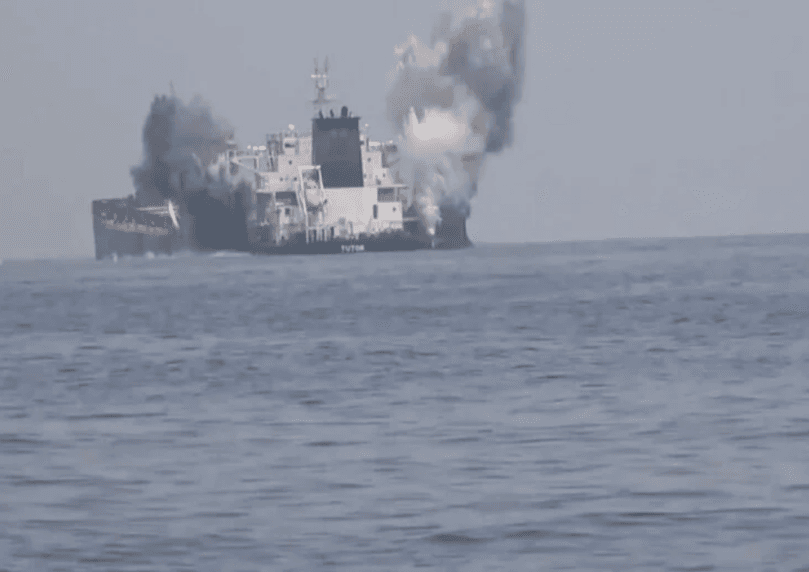

Saudi maritime oil exports from the Red Sea are becoming increasingly difficult to track as tankers switch off their identification and tracking systems amid fears of Houthi attacks from Yemen.
According to shipping-tracking companies, all tankers recently loading crude at Saudi Arabia’s Yanbu port operated without continuously transmitting their locations—a practice known in the industry as “going dark.” The development is making it increasingly difficult for markets to determine how much Saudi oil is actually moving through the Red Sea and how severely the Houthi threat is already disrupting energy supplies, Reuters reported Wednesday.

 5+
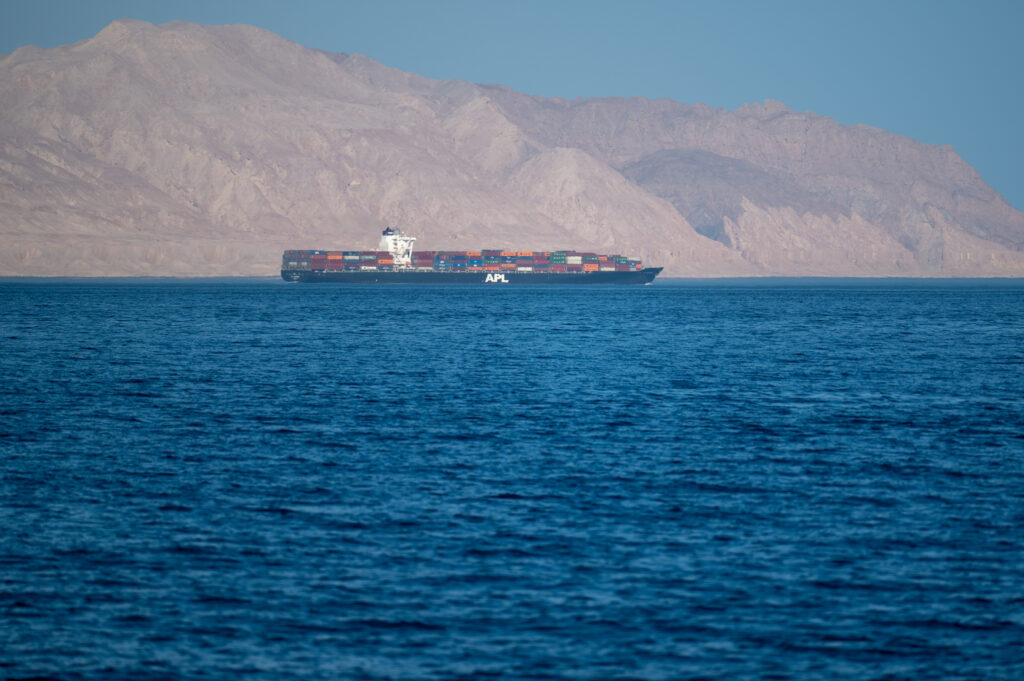
5+Large commercial vessels generally broadcast their positions using the Automatic Identification System, or AIS. The system allows shipping companies, insurers, commodity traders and intelligence organizations to monitor ships, including their locations, direction of travel and, in some cases, destinations.
But in a region where broadcasting a ship’s precise location could also help make it a target, that information becomes a liability. When a tanker switches off its AIS system, it effectively becomes “invisible” to the public and much of the commercial tracking network.
That does not mean the tanker actually disappears. Ships can sometimes be located through satellite data or reconstructed movements once they reappear on tracking systems. But while a vessel is “dark,” determining precisely where it traveled, what it did and how much oil it was carrying becomes considerably more difficult.
And that is precisely the problem now surrounding Saudi oil.
 5+
5+George Morris, an analyst at Vortexa, told Reuters: “Last week, all loadings at Yanbu were conducted in the dark. Right now, we are not seeing any loading with active AIS.” Kpler analyst Nawi Qin Su estimated that approximately 70% of crude loadings at ports along Saudi Arabia’s western coast have taken place without continuous tracking in recent weeks. According to her, every oil shipment from Yanbu since July 23 involved tankers that did not provide continuous AIS coverage.
The result is an increasingly murky picture of one of the world’s most important oil exporters. Even experts cannot agree on how much Saudi oil is currently leaving the country.
In the week beginning August 3, Vortexa estimated Yanbu loadings at approximately 2.38 million barrels per day, down from 2.71 million the previous week. Kpler presented a dramatically different picture, estimating that loadings plunged to 1.78 million barrels per day from 4.04 million. AXSMarine, meanwhile, estimated that loadings actually increased—from approximately 420,000 barrels per day to 850,000.
 5+
5+Those discrepancies are more than a technical problem. The data are used by major organizations including the International Energy Agency, OPEC and oil traders to estimate global supply and anticipate price movements. The less reliable the information becomes, the harder it is to determine whether Saudi exports are genuinely falling—or whether millions of barrels are simply moving through the region unseen.
Since the outbreak of the regional war, the Iranian-backed Houthis have increasingly turned shipping lanes surrounding Yemen into a battlefield as part of the broader confrontation in the Middle East. On July 20, the Houthis declared a “naval blockade” against Saudi Arabia. They have since claimed attacks against Saudi-linked tankers, oil facilities at Yanbu and other infrastructure along the Red Sea coast. Saudi Arabia has rejected Houthi claims regarding its policies toward Yemen.
 5+
5+On August 9, Reuters reported that the Houthis attacked Saudi Aramco’s refinery in Jizan in southwestern Saudi Arabia with a drone. Saudi Arabia said a fire broke out at the facility but was extinguished without casualties. The attack came shortly after Saudi Arabia signed a defense alliance with Turkey and Pakistan amid mounting regional threats—another indication of how rapidly the region’s security calculations are shifting as threats to critical infrastructure and maritime trade intensify.
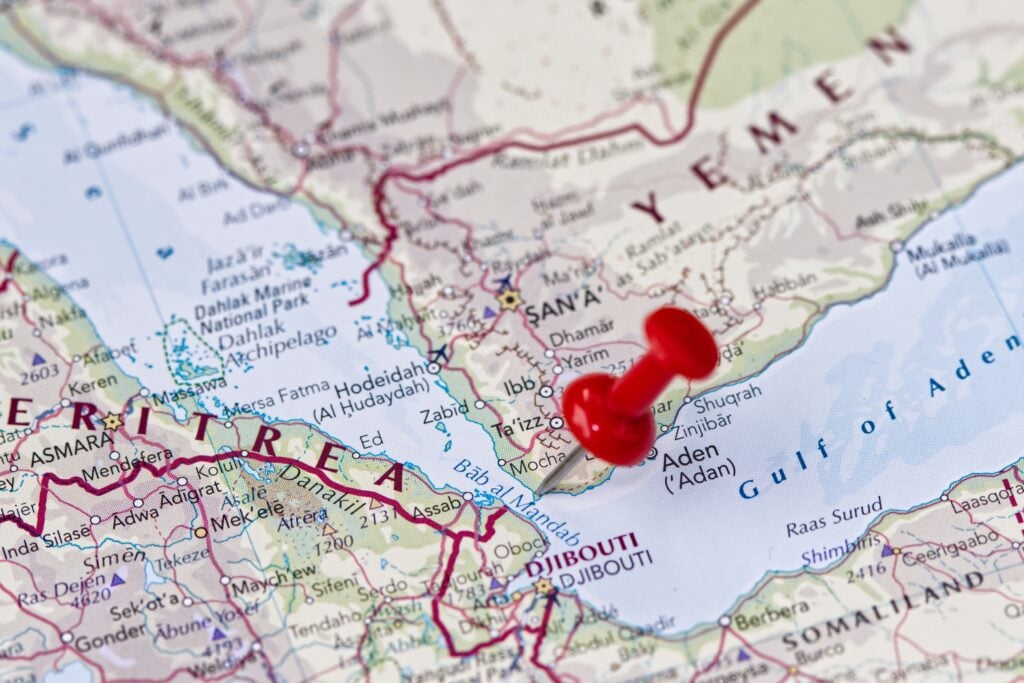
But the Red Sea is only part of the problem. Its importance stretches far beyond Saudi Arabia because of geography. The Red Sea connects to the Indian Ocean through the Bab al-Mandab Strait, the narrow maritime passage at its southern end and one of the world’s most strategically important shipping routes.
A tanker leaving Yanbu for Asian markets can normally sail south through the Red Sea, cross Bab al-Mandab and continue into the Indian Ocean. Any deviation from that route makes the voyage longer, more complicated and more expensive.
Tracking data suggest Saudi Arabia is increasingly turning north instead. One option is moving oil through the Suez Canal. Another is Egypt’s SUMED pipeline, which connects Ain Sokhna on the Red Sea coast with Sidi Kerir on the Mediterranean.
 5+
5+During the latest week examined, crude oil and condensate loadings at Sidi Kerir reached approximately 2.17 million barrels per day—a record and roughly 50% higher than the previous week. According to Vortexa, approximately 90% of that volume was Saudi oil.
In other words, rather than sending all its crude south through increasingly dangerous waters, Saudi Arabia appears to be finding alternative routes to keep its oil flowing to global markets.
The change was already visible shortly after the Houthis announced their maritime blockade in July. Three tankers—the Xin Long Yang, Rodos and Amazon—carrying Saudi oil to China and India reversed course in the Red Sea and headed toward the Suez Canal after the Houthis issued warnings concerning activity at Saudi ports. Other vessels have changed course entirely to avoid the region.
Shipping company DHT, which operates massive crude carriers, said it previously routinely sent tankers south through Bab al-Mandab after loading Saudi oil. That calculation has changed.
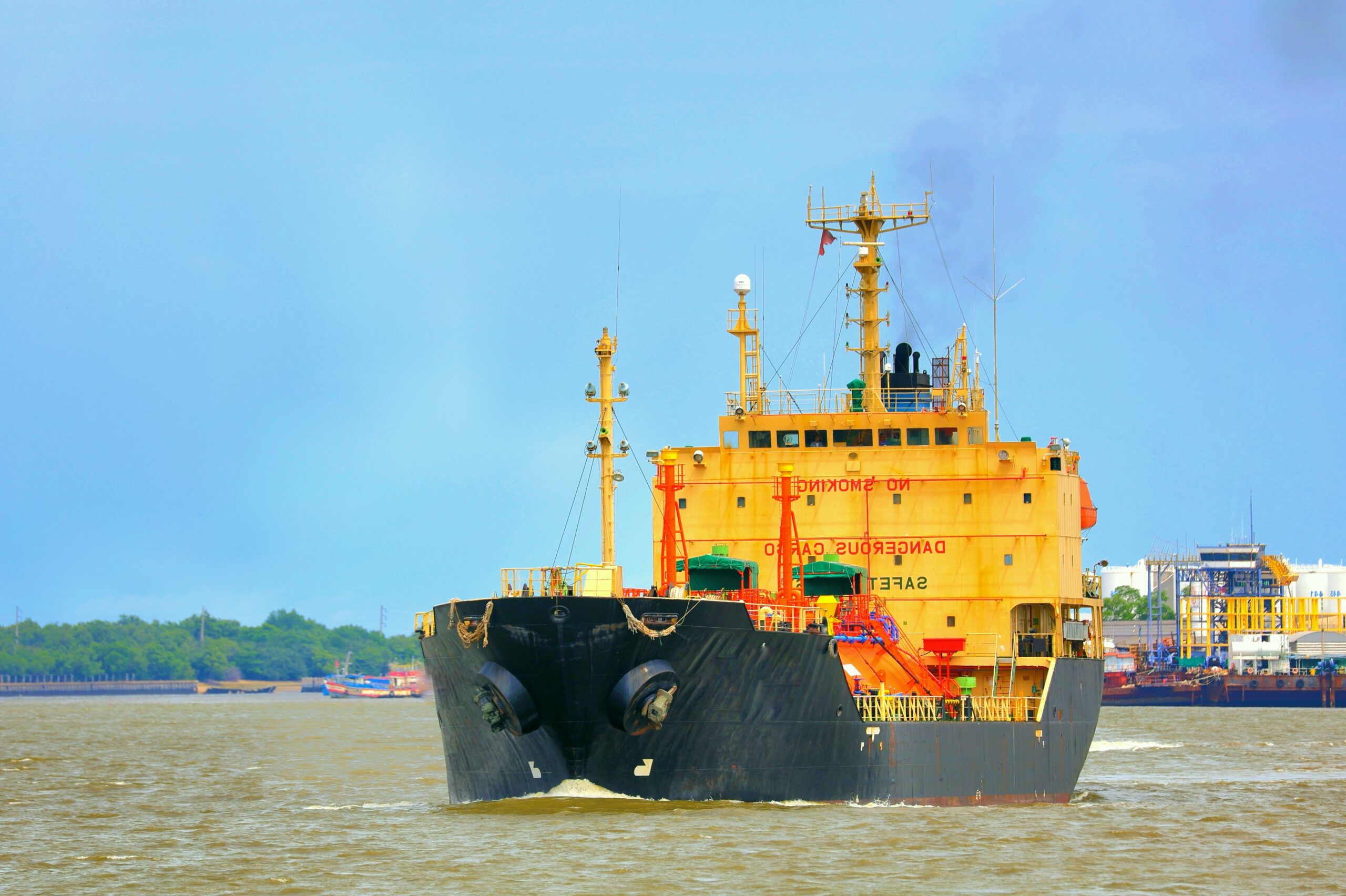
“It has recently become a little more challenging,” CEO Svein Moxnes Harfjeld said, adding that most loadings of very large crude carriers—not only his company’s—are now being directed north and northwest.
 5+
5+The financial cost of the threat is also climbing. In late July, the maritime risk zone defined by London’s shipping insurance market was expanded to cover additional waters off Saudi Arabia’s Red Sea coast, extending almost as far as Jizan.
War-risk insurance premiums at Saudi ports including Jeddah and Yanbu quickly surged from approximately 0.25% to 1% of a vessel’s value. Coverage for sailing through the southern Red Sea has climbed to approximately 1%-2%, compared with around 0.3% previously.
Tankers are going dark. Ships are reversing course. Oil is being diverted through alternative routes. And insurers are charging dramatically more simply to enter the region.
What began as a Houthi threat against shipping is increasingly becoming a test of whether one of the world’s most important energy exporters can keep its oil moving without allowing the Red Sea battlefield to dictate the flow—and price—of global energy.