



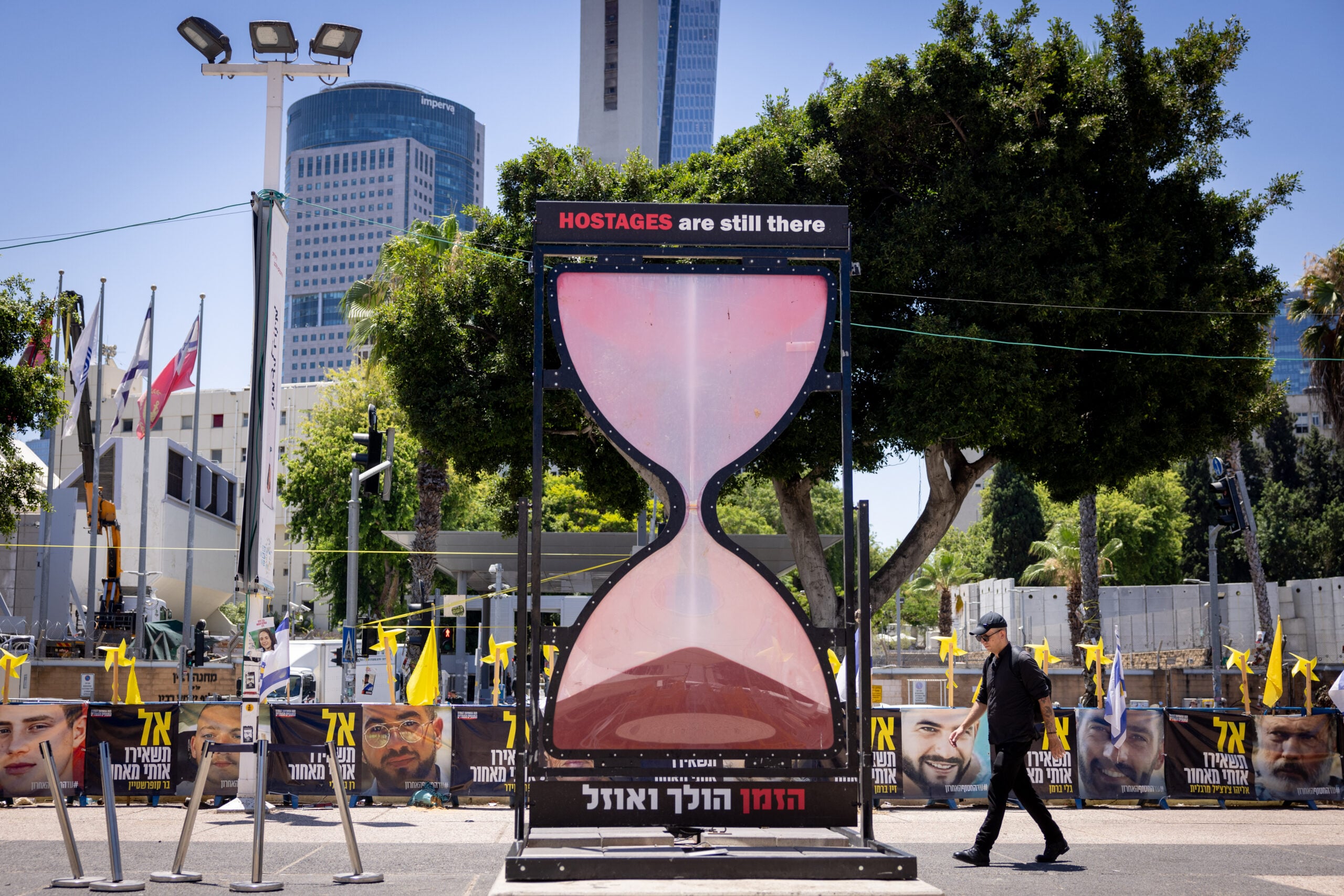
Tel Aviv is now pushing to make the temporary name of Museum Square permanent: “Hostages Square.” On the surface, it looks like commemoration. In reality, it’s a political decision with far deeper meaning. Square names aren’t just street signs—they determine how history will be remembered, who gets to define its meaning, and who wins symbolic ownership of public space.

 2+
2+This square has existed for over fifty years. For all those years, it never had an official name—it was simply known as Tel Aviv Museum Square. Now, precisely as Israeli society still grapples with the aftermath of the Simchat Torah massacre, the municipality wants to cement a new name that can’t be separated from the plaza’s political history. Because before it was “Hostages Square,” this was Refusal Square.
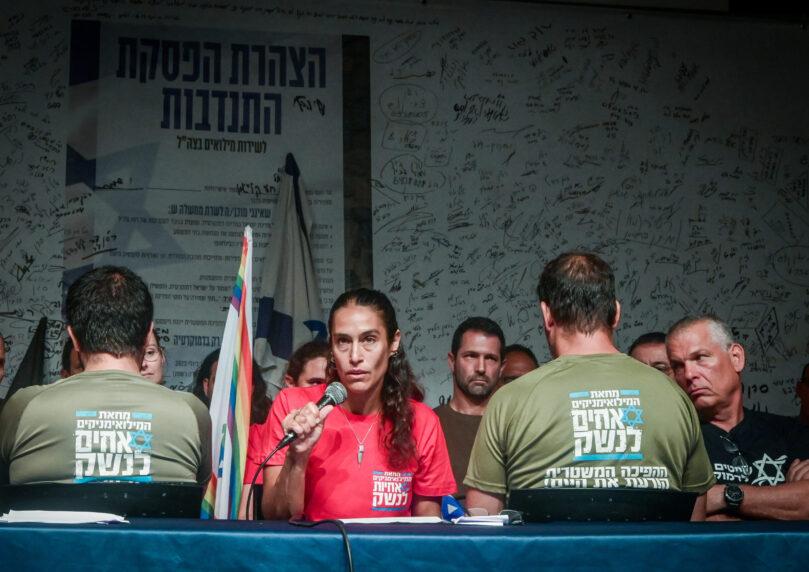
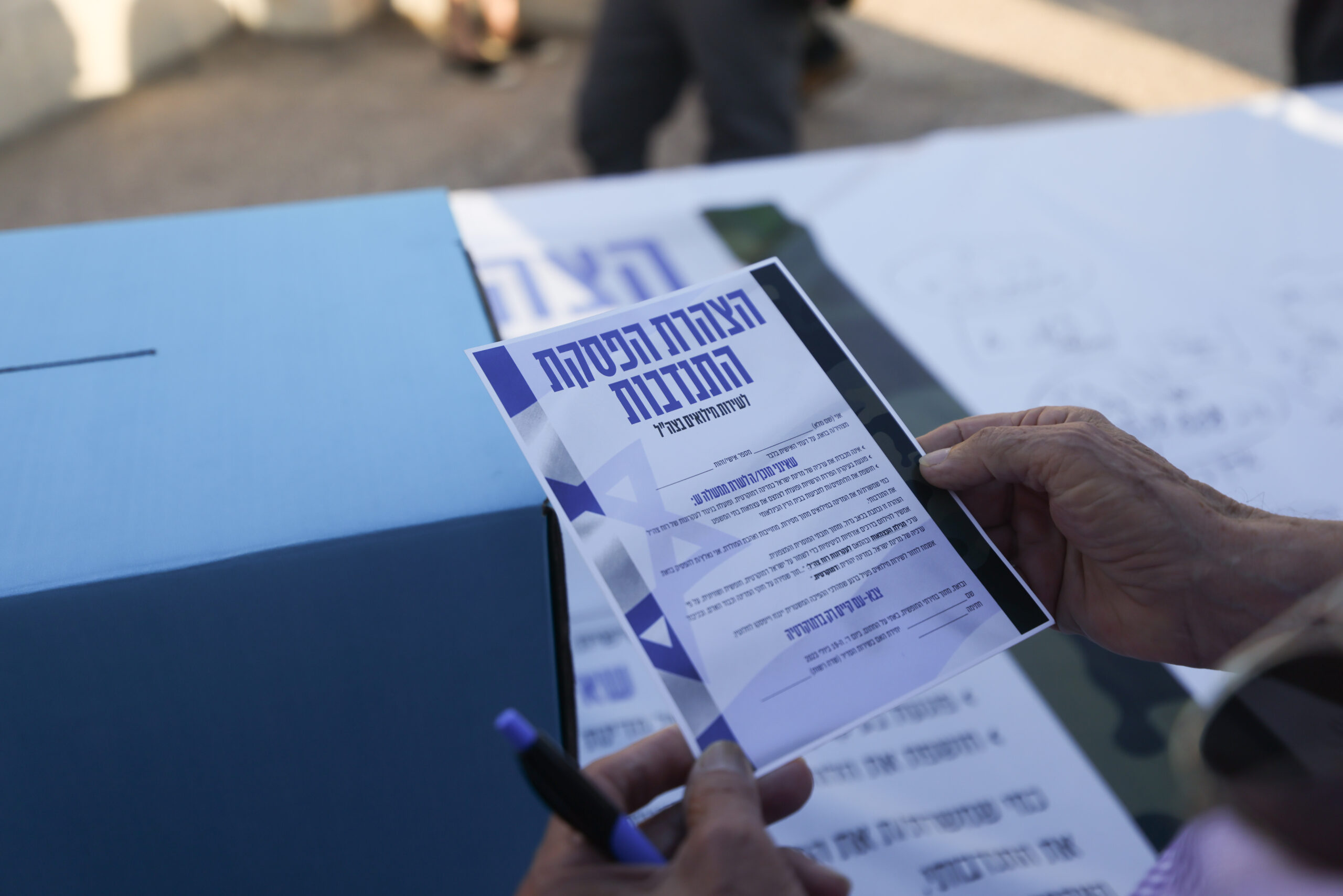
In July 2023, exactly three years ago, the plaza hosted one of the central events of the refusal movement, when members of “Brothers in Arms” held a public ceremony signing declarations of non-reporting for duty. Shortly after came the images seared into public consciousness from their declaration at the Air Force base in Herzliya (“Golani! Golani!”). The fighter jet installation planted in the ground at that same square—facing the Kirya military headquarters and Air Force command—became a symbol of that protest. None of this happened by chance, or anywhere else. It happened at one of the most sensitive and symbolic public focal points in the State of Israel.
 2+
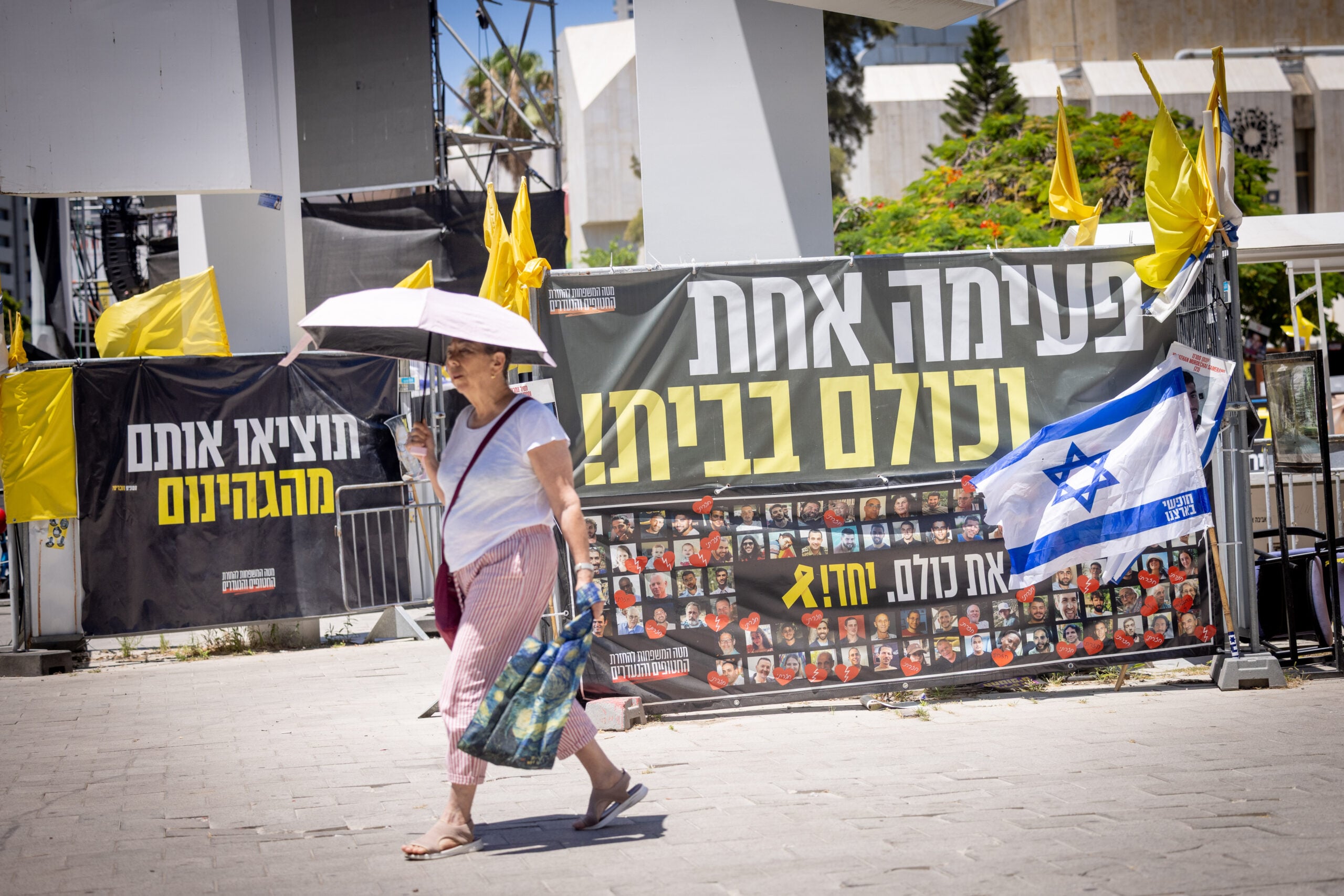
2+After October 7th, that same plaza became the headquarters for the hostage families. Now the municipality wants to make the temporary name permanent. In doing so, it’s not just commemorating the hostages—it’s cementing the political identity of the space and the baggage accumulated there in recent years.
There’s no dispute about the obligation to do everything to bring the hostages home. They belong to all the people of Israel. Precisely for that reason, the struggle for them must not become a permanent stamp on a square already identified with one of the sharpest political battles the state has known. There’s also a broader process here. For years, Tel Aviv’s central squares have been gradually expropriated from shared public space and turned into spaces identified with a particular political public. Squares meant to belong to everyone acquired the distinct identity of one camp, until large segments of the public stopped seeing them as shared civic space. The current decision doesn’t create this reality—it gives it official, permanent authorization.
 2+
2+And in my view, there’s also an obscuring of the sequence of events. The name “Hostages Square” commemorates the disaster’s results but barely mentions questions about what preceded it. The refusal movement of summer 2023 was, in my view, one of the factors that led to the October 7th massacre, after broadcasting to Israel’s enemies a message of internal division and damage to deterrence. Hamas itself publicly referenced Israel’s internal crisis as part of its assessment of the state’s condition on the eve of war. You can’t disconnect this square from that context as if it only began its life after the disaster.
The square’s location only amplifies the decision’s significance. It stands opposite the Kirya, near the courts, Tel Aviv Museum, libraries, and cultural and knowledge institutions. This isn’t just another urban intersection. It’s one of Israel’s most important symbolic centers. Incidentally, beneath that same plaza has sat “Golda Parking Garage” for decades. No one thought to turn it into “Failure Parking Garage.” Apparently, not every national trauma requires rewriting the urban map.
Square names aren’t just memory. They’re also a declaration of symbolic ownership. And whoever seeks today to cement the name “Hostages Square” isn’t just changing a street sign. They’re seeking to determine how the place’s history will be remembered, and who will be its symbolic owners for generations.