


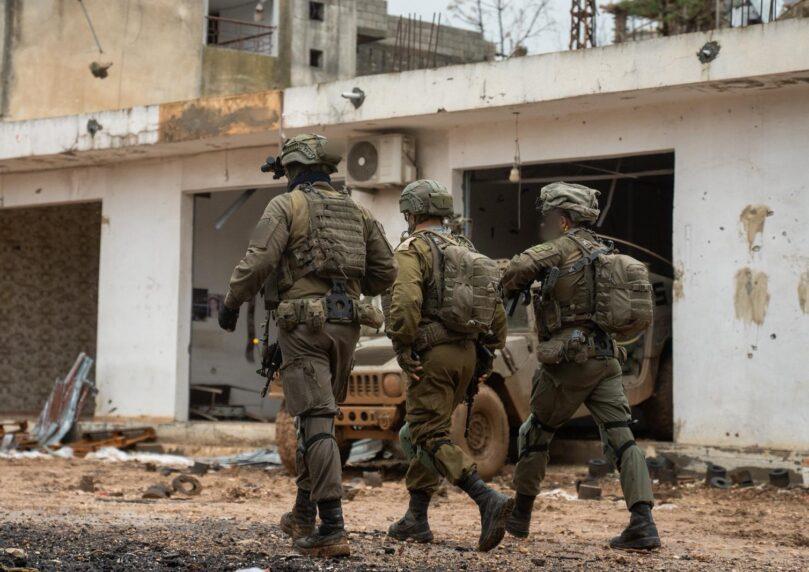

IDF troops operating in southern Lebanon are sounding the alarm over Hezbollah’s explosive drones, describing them as the most lethal threat on the current battlefield. Despite the threat being well-known from the war in Ukraine and used by Hamas during the October 7 massacre, soldiers say the IDF has yet to develop an adequate defensive or operational response.
Reality on the ground forces troops to confront kamikaze drones under harsh conditions of uncertainty, with soldiers feeling their lives are at risk due to a lack of advanced jamming and interception systems. Troops describe an unbridgeable gap between Hezbollah’s proven capabilities and the orders they receive from above. The sense of vulnerability is daily, and the guidelines are seen as irrelevant to a reality where a small, fast drone appears above a unit without advance warning.
One soldier’s testimony from southern Lebanon paints a grim picture: “We’re like sitting ducks here. There’s a huge gap between the guidelines we receive and the operational limitations in the field. They tell us that if we identify a drone, we should open fire with personal weapons. Anyone who’s tried to hit a small, fast target like that with a Tavor or M16 understands it’s nearly impossible. The operational response is partial and in some cases simply doesn’t exist.”
Another soldier shares his concern: “This breaks my heart. These things are said out of deep concern for my friends’ lives and from operational experience in the field. This threat changes the entire nature of combat. The lessons aren’t being fully implemented, and we need urgent adjustments in terms of equipment and protection immediately.”
Explosive drones have become the weapon that changed the face of modern warfare. These are cheap, available, and easy-to-operate drones that carry explosives and navigate directly to the target with centimeter precision. The battlefield in Ukraine proved that small drones can destroy tanks and armored personnel carriers at a cost of just hundreds of dollars. Hamas adopted the method on October 7 to neutralize surveillance systems and fire on ground forces.
Hezbollah has perfected the use of drones and turned them into a full-fledged offensive system. Yesterday’s incident, in which a soldier was seriously wounded by an explosive drone strike, is just one example of the high level of risk. Despite the army’s attempts to introduce electronic warfare and jamming systems, soldiers claim the equipment doesn’t reach all forces and that the mobility of the drones makes effective blocking difficult.
Troops in the field make clear that “opening fire with personal weapons” is not a solution, but evidence of a lack of solutions. The reality in southern Lebanon demands mass equipping with personal and team jamming devices, and development of hard-kill interception technologies capable of dealing with drone swarms. Without such a change, soldiers will continue to feel exposed in a field where the threat comes from above, smaller and faster than ever.