


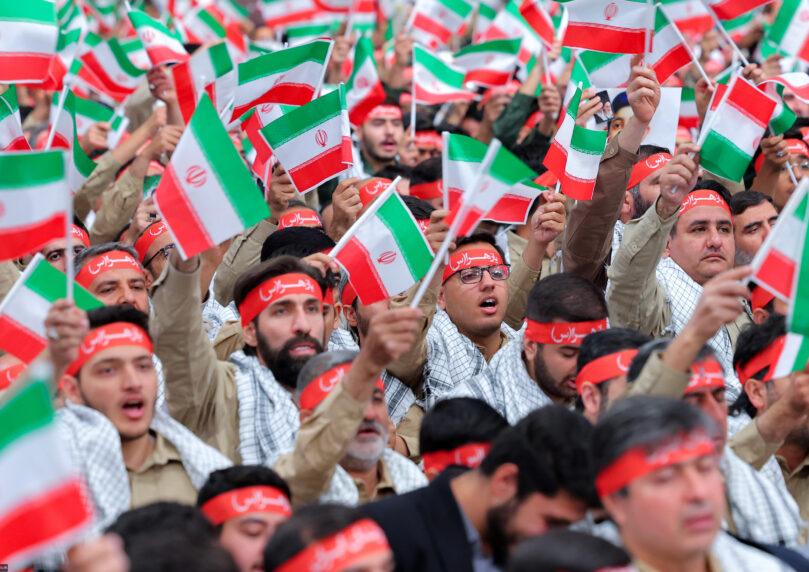

The Wall Street Journal published an extensive report describing Israel’s ongoing effort to strike at the Iranian regime’s security mechanisms, combining airstrikes, precise intelligence, and direct pressure on commanders in the field. According to the report, Israel is working to locate and eliminate regime personnel even in hiding places, with help from information provided by Iranian civilians.
One of the key revelations involves phone calls made by operatives identified with the Mossad to Iranian commanders. In one of the published recordings, an intelligence agent tells a senior commander: “We know everything about you. You’re on our blacklist,” warning that if he doesn’t stand with the public, his fate will be like that of senior officials who were eliminated. The commander responded that he fears for his life and said: “I’m already a dead man.”
At the same time, according to the report, Israel has expanded strikes against the regime’s security forces. Targets have included headquarters, police stations and checkpoints, as well as hiding places where regime personnel moved after official facilities were hit. In some cases, security force members gathered in sports complexes, slept in cars, buses and civilian buildings, trying to avoid being struck.
The report also describes a series of assassinations of senior officials. On Friday, Ali Larijani appeared at a rally in Tehran, but four days later he was killed in an airstrike in the city’s suburbs. That same night, Basij commander Gholam Reza Soleimani was also killed, after Iranian civilians reportedly passed information about his location in a tent where he was hiding with his deputies.
According to documents obtained by the newspaper, Israel has so far dropped about 10,000 munitions on thousands of targets, including more than 2,200 targets linked to the Revolutionary Guards, the Basij and internal security forces. Israeli officials estimate that thousands of regime personnel have been killed or wounded, and that the campaign is damaging force morale and their operational capability.
The report further reveals that in the first days of fighting, Israeli fighter jets systematically struck command centers of the security mechanisms, and later expanded targets to include alternative gathering points, among them stadiums and sports complexes. One of the deadliest strikes, according to assessments, occurred at Azadi Stadium in Tehran, where hundreds of security force members were killed.
At a later stage, the Air Force expanded its operations and deployed drones over Tehran and other areas, focusing on Basij checkpoints and outposts. These strikes, sometimes guided by civilian intelligence, resulted in pinpoint hits on security force personnel.
Israeli officials estimate that the combination of airstrikes, intelligence penetration and personal pressure on commanders is undermining the regime’s control mechanisms. However, the report notes that despite growing signs of disorder inside Iran, there is currently no indication that these moves alone will bring down the regime in the immediate term, and that a scenario in which the regime survives the campaign remains possible.